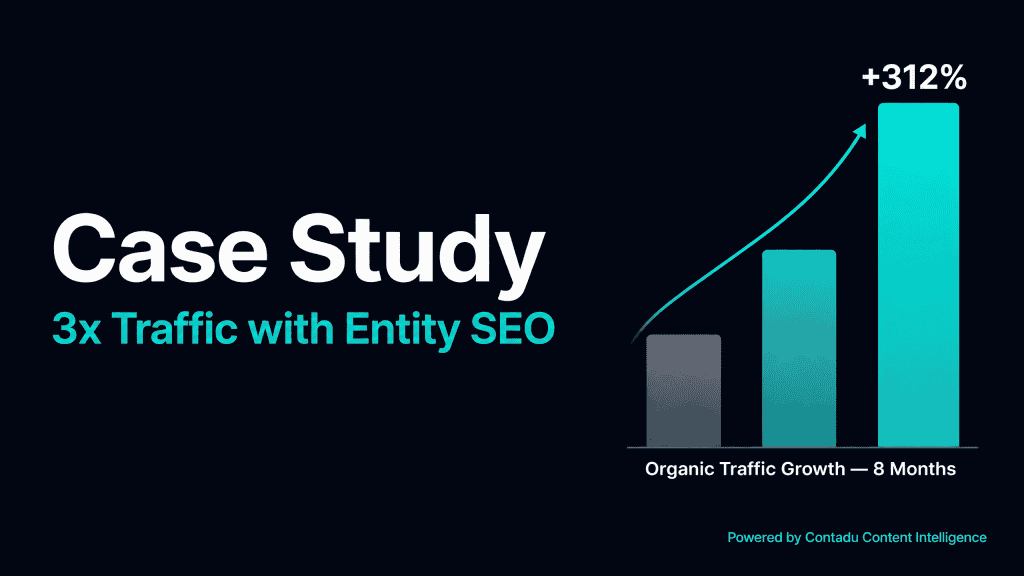
📍 Semantic Summary The Idea: Traditional SEO relies on keyword volume and backlinks. Entity SEO shifts the focus to building a highly interconnected Knowledge Graph that proves topical authority to AI search engines. This composite case study draws on data from B2B SaaS clients who implemented entity-first strategies using Contadu. The Challenge: Mid-market SaaS platforms […]
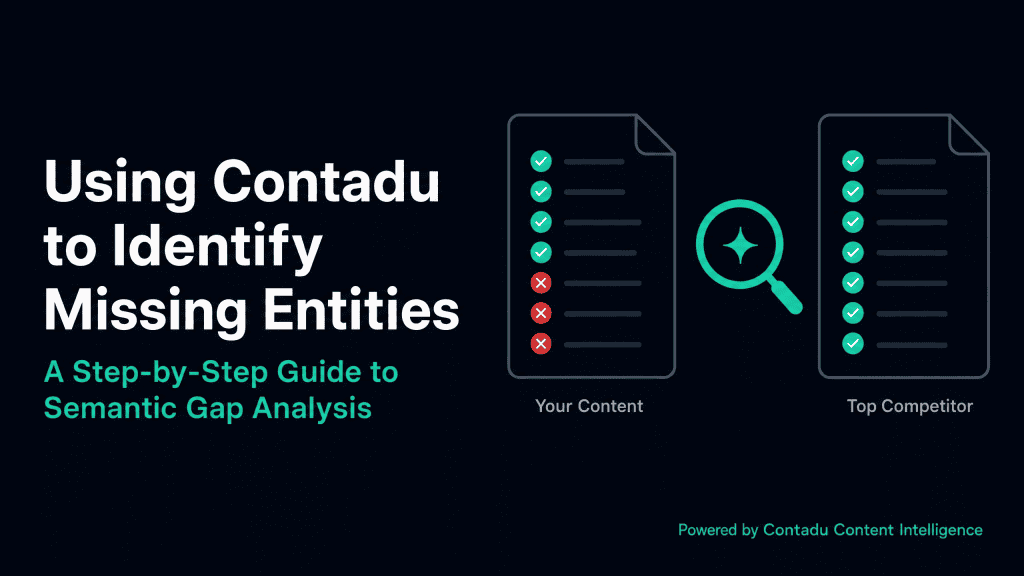
Using Contadu to Identify Missing Entities in Your Content.
📍 Semantic Summary Idea: In the era of AI Answer Engines, missing a core entity in your content is worse than missing a keyword. It signals to algorithms that your Topical Authority is incomplete. Challenge: Manually identifying which semantic nodes your content lacks compared to top-ranking competitors is practically impossible without Content Intelligence tools. Summary: […]
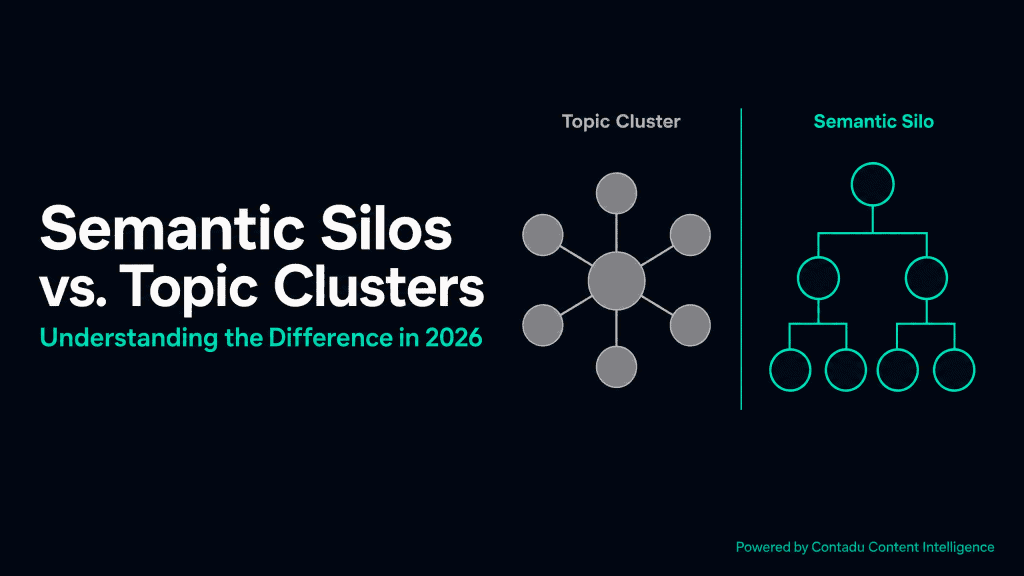
Semantic Silos vs. Topic Clusters: Understanding the Difference in 2026.
📍 Semantic Summary Idea: While marketers use the terms interchangeably, Topic Clusters and Semantic Silos represent two distinct stages of content architecture evolution. Challenge: Building a Topic Cluster based solely on shared keywords creates a flat structure that fails to establish deep Topical Authority in the era of AI Answer Engines and Knowledge Graphs. Summary: […]
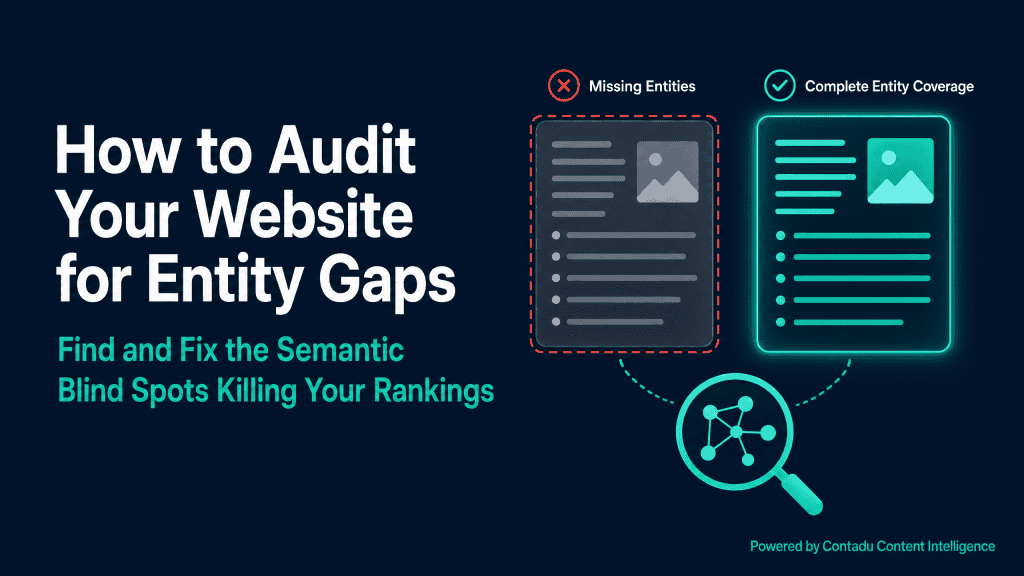
How to Audit Your Website for Entity Gaps.
📍 Semantic Summary Idea: Traditional keyword gap analysis is obsolete. To dominate modern search, you must perform an entity gap audit to identify missing semantic nodes in your content. Challenge: Competitors are ranking higher not because they use better keywords, but because their Knowledge Graphs are more complete, covering entities that your website completely ignores. […]
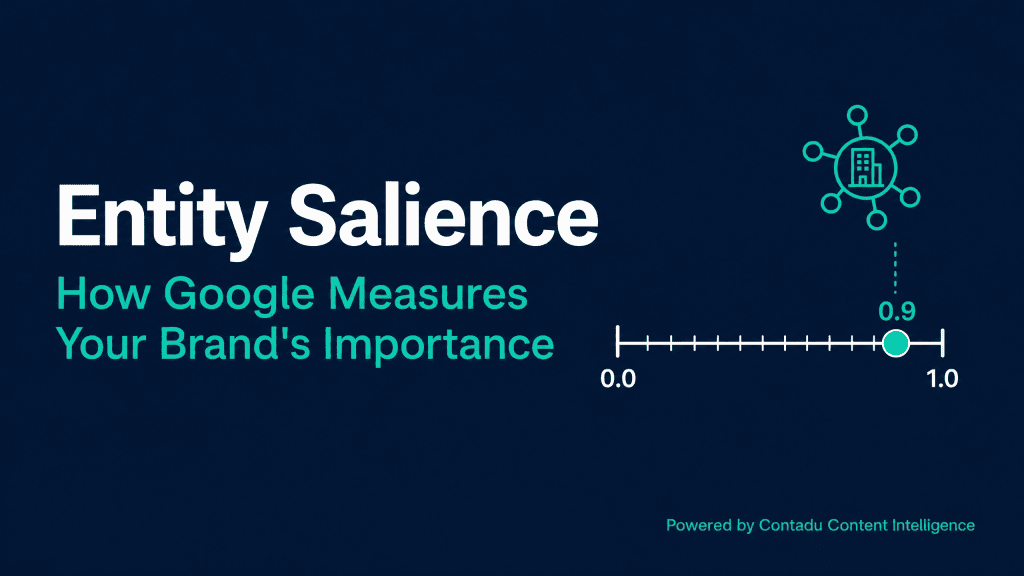
Entity Salience: How Google Measures Your Brand’s Importance.
📍 Semantic Summary Idea: Just mentioning a keyword on a page is no longer enough. Search engines calculate Entity Salience a score that determines how central an entity is to the overall meaning of a text. Challenge: Writers often “sprinkle” target keywords throughout an article without making them the focal point. This results in a […]
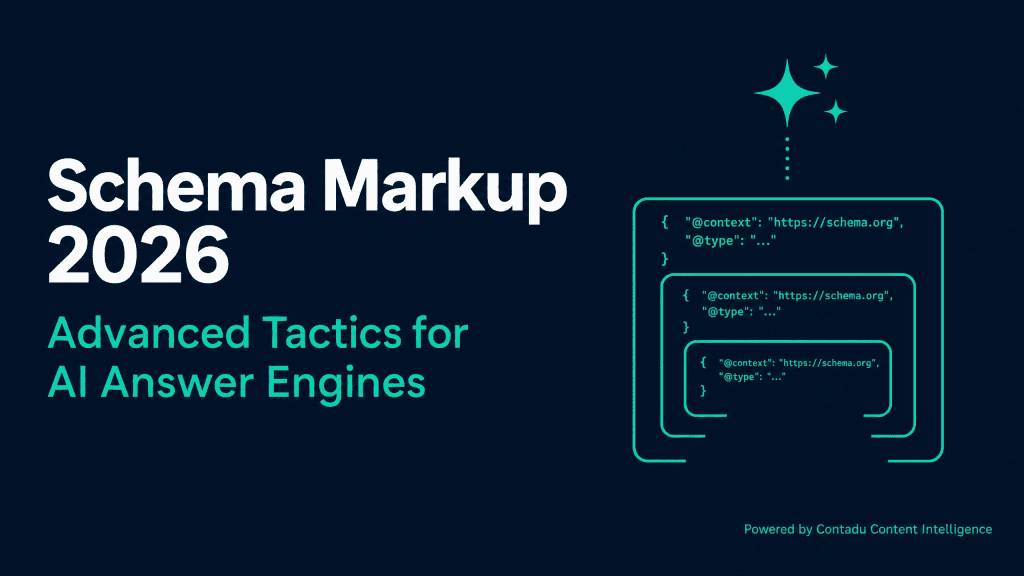
Schema Markup 2026: Advanced Tactics for AI Answer Engines.
📍 Semantic Summary Idea: Basic Article and Organization schema are no longer competitive advantages; they are the bare minimum. In 2026, dominating AI answer engines like ChatGPT and Google’s AI Overviews requires advanced Schema markup that nests entities and explicitly defines relationships. Challenge: Most websites rely on automated plugins that generate flat, disconnected structured data. […]
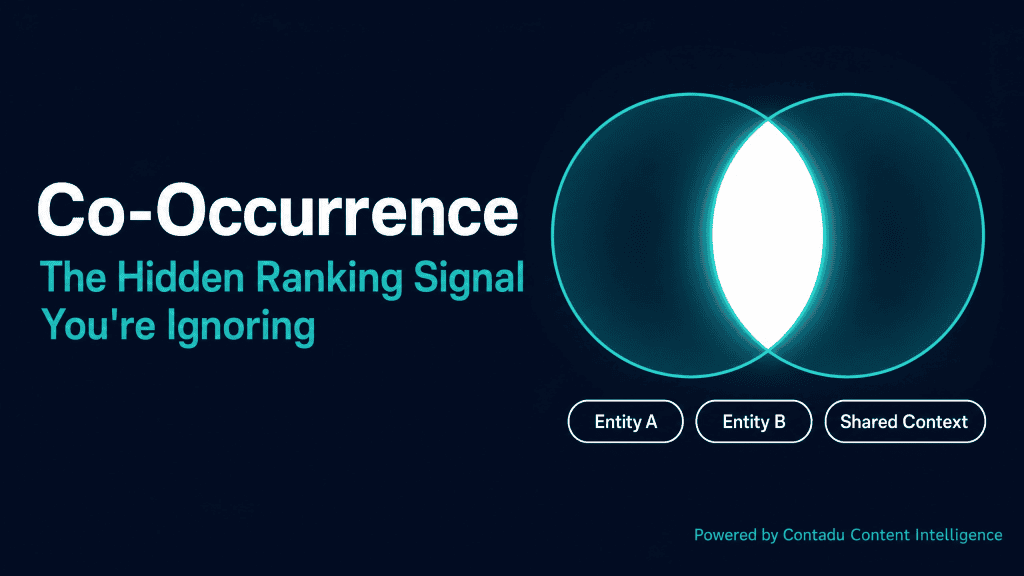
Co-Occurrence: The Hidden Ranking Signal You’re Ignoring.
📍Semantic Summary Idea: In 2026, search engines do not just count how many times you use a target keyword; they analyze the surrounding vocabulary. Co-occurrence is the presence of related entities, terms, and concepts that naturally appear together in authoritative content. Challenge: Writers relying on outdated SEO checklists often stuff primary keywords while ignoring […]
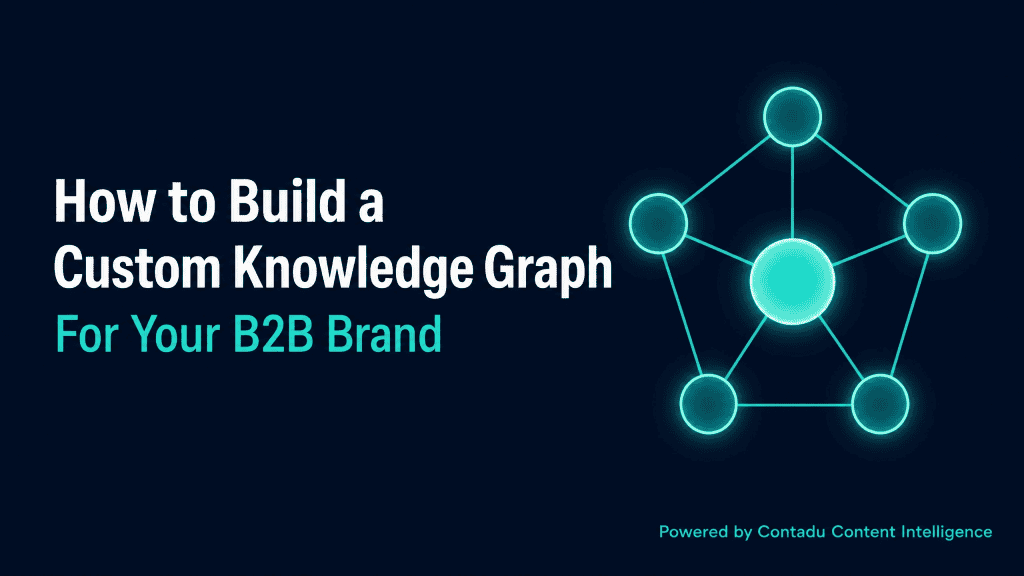
How to Build a Custom Knowledge Graph for Your B2B Brand.
📍 Semantic Summary Idea: You don’t need to wait for Google to figure out who you are. By building a custom Knowledge Graph on your own website using Schema markup and interconnected content, you can explicitly define your brand entity, your products, and your expertise to AI search engines. Challenge: Most B2B websites are structured […]