To choose a content brief tool, test it on your own keywords against 12 criteria: fresh SERP data, the languages and locations you need, term and entity suggestions, outlines based on top-ranking pages, question research, search intent, GEO fields for AI search, editable templates, writer handoff, integrations, a pricing model that fits your volume, and […]
GEO Content Brief vs SEO Brief: What to Add for AI Search (Free Template)
A GEO content brief is an SEO brief extended for AI search: besides the keyword, intent and outline, it lists the questions the page must answer, the direct answer for each one, the entities to cover, the evidence to include, and which passages you want AI systems like ChatGPT, Perplexity and Google AI Overviews to […]
What Content Formats Work Best for GEO? 8 Formats AI Search Cites (with Examples)
The content formats that work best for GEO (generative engine optimization) are the ones AI search engines can lift as a complete answer: direct definitions, step-by-step how-to guides, comparison tables, ranked lists, FAQ sections, original data and statistics, glossaries, and expert quotes. What they share is structure: one question per section, the answer first, and […]
How to Build a GEO Strategy from Scratch (Step-by-Step)
A GEO strategy is a plan to get your brand cited in AI-generated answers from ChatGPT, Google AI Overviews, AI Mode, Gemini, Perplexity and Copilot. To build one from scratch, audit how AI engines see you today, make sure AI crawlers can access your site, pick the topics you can own, publish content that’s easy […]
AI Crawlers List 2026: OAI-SearchBot, GPTBot, ClaudeBot, PerplexityBot and How to Allow Them
AI crawlers fall into three groups: training bots (GPTBot, ClaudeBot, CCBot), AI search bots (OAI-SearchBot, Claude-SearchBot, PerplexityBot) and user-triggered fetchers (ChatGPT-User, Claude-User, Perplexity-User). To appear in AI search answers, allow the search bots in robots.txt; blocking the training bots is a separate business decision and does not remove you from AI search. Last updated: October […]
GEO for Local Businesses: Getting Cited by AI for “Near Me” Queries
Semantic Summary Idea: When someone asks ChatGPT, Gemini or Google’s AI Overviews for the best coffee shop, plumber or dentist “near me,” the AI doesn’t show a ranked list it picks one or two businesses to recommend by name. Challenge: most local SEO advice still optimizes purely for the traditional map pack, which is only […]
Content Provenance for AI Search: Citation, Attribution, and Source Signals
Semantic Summary Idea: Content provenance is the evidence trail behind a page. It shows where a claim came from, who created or reviewed it, when it was last checked, and what changed. It helps readers decide whether a page deserves trust. Challenge: Teams often publish useful content without a reliable record of its claims, sources, […]
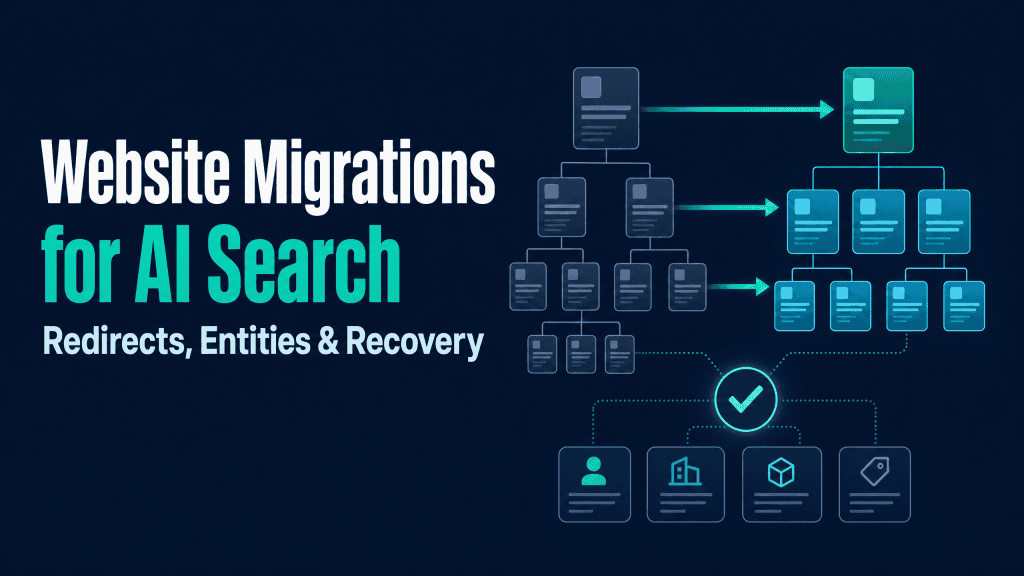
Website Migrations for AI Search Visibility: Redirects, Entities, and Recovery
Semantic Summary The Idea: A website migration is a move of URLs, content, and technical signals. It can include a new domain, new paths, a new content management system, a redesign, or a new site structure. A safe move protects the meaning and value of important pages, not only their addresses. The Challenge: Teams often […]
JavaScript Rendering for AI Search: A Technical QA Checklist
Semantic Summary The Idea: JavaScript rendering is an AI search QA problem when essential content, links, metadata, or structured data exist only after client-side execution. Google documents robust JavaScript rendering capabilities, but no equivalent universal rendering contract exists for every AI crawler. The Challenge: A page can look complete in a Chrome browser yet expose […]
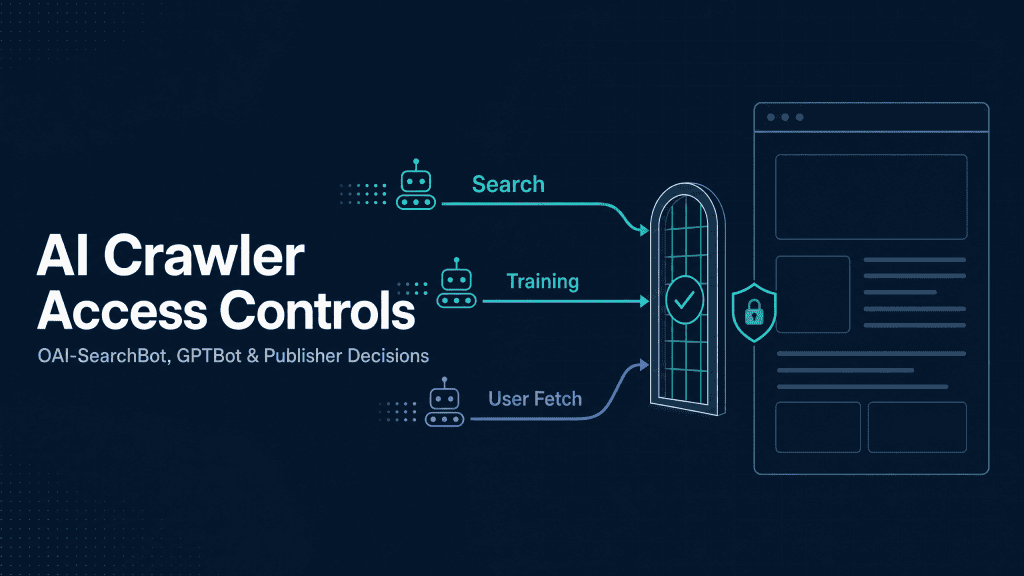
AI Crawler Access Controls: OAI-SearchBot, GPTBot, and Publisher Decisions
Semantic Summary The Idea: AI crawler access is not one decision. OpenAI documents separate roles for OAI-SearchBot, GPTBot, and ChatGPT-User. A publisher can allow automated discovery for ChatGPT search while separately expressing a preference against model-training use. The Challenge: Broad robots.txt rules, CDN or WAF settings, and stale plugin configurations often treat every AI bot […]