A GEO content brief is an SEO brief extended for AI search: besides the keyword, intent and outline, it lists the questions the page must answer, the direct answer for each one, the entities to cover, the evidence to include, and which passages you want AI systems like ChatGPT, Perplexity and Google AI Overviews to […]
What Content Formats Work Best for GEO? 8 Formats AI Search Cites (with Examples)
The content formats that work best for GEO (generative engine optimization) are the ones AI search engines can lift as a complete answer: direct definitions, step-by-step how-to guides, comparison tables, ranked lists, FAQ sections, original data and statistics, glossaries, and expert quotes. What they share is structure: one question per section, the answer first, and […]
How to Build a GEO Strategy from Scratch (Step-by-Step)
A GEO strategy is a plan to get your brand cited in AI-generated answers from ChatGPT, Google AI Overviews, AI Mode, Gemini, Perplexity and Copilot. To build one from scratch, audit how AI engines see you today, make sure AI crawlers can access your site, pick the topics you can own, publish content that’s easy […]
AI Crawlers List 2026: OAI-SearchBot, GPTBot, ClaudeBot, PerplexityBot and How to Allow Them
AI crawlers fall into three groups: training bots (GPTBot, ClaudeBot, CCBot), AI search bots (OAI-SearchBot, Claude-SearchBot, PerplexityBot) and user-triggered fetchers (ChatGPT-User, Claude-User, Perplexity-User). To appear in AI search answers, allow the search bots in robots.txt; blocking the training bots is a separate business decision and does not remove you from AI search. Last updated: October […]
GEO for Local Businesses: Getting Cited by AI for “Near Me” Queries
Semantic Summary Idea: When someone asks ChatGPT, Gemini or Google’s AI Overviews for the best coffee shop, plumber or dentist “near me,” the AI doesn’t show a ranked list it picks one or two businesses to recommend by name. Challenge: most local SEO advice still optimizes purely for the traditional map pack, which is only […]
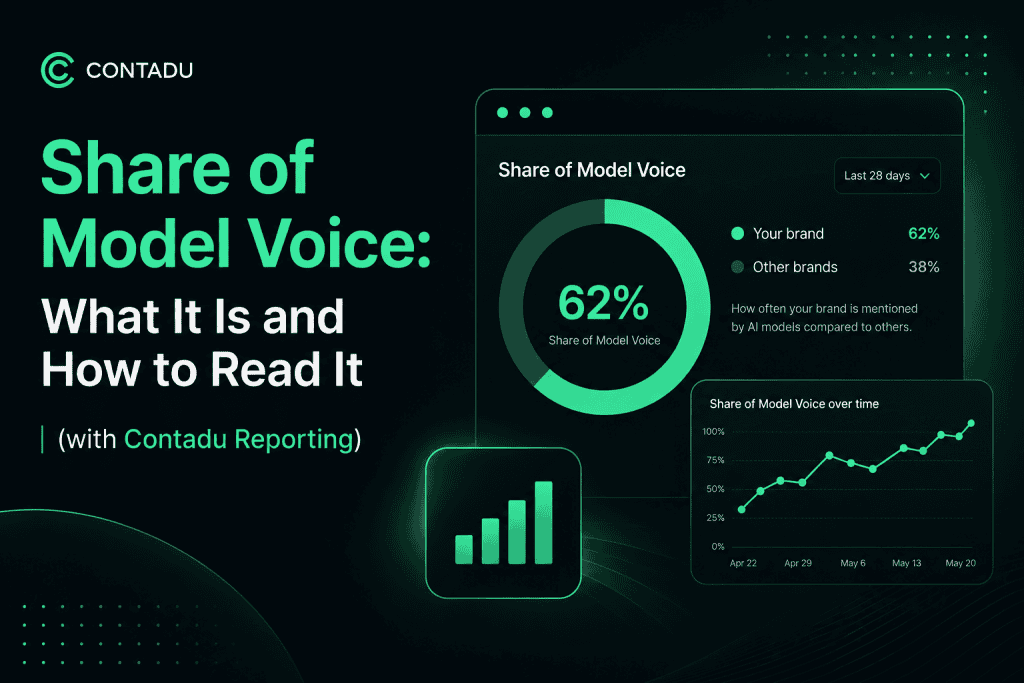
Share of Model Voice: What It Is and How to Read It (with Contadu Reporting)
Semantic Summary Idea: Share of Model Voice (also written as AI Share of Voice or AI SOV) is a brand visibility metric that measures how often an AI model mentions your brand versus competitors when it answers a category-relevant question. Challenge: most teams still report on pageviews and keyword rank, which say nothing about whether […]
How to Optimize Your Site Architecture for AI Crawlers · Contadu
Semantic summary Idea: AI crawlers like ChatGPT’s OAI-SearchBot and Anthropic’s ClaudeBot operate under strict resource constraints. They prioritize flat, entity-rich architectures over deep hierarchies, and will abandon crawls of sites that bury their content more than three clicks from the homepage. Optimizing your site architecture for AI crawlers is now a prerequisite for LLM visibility. […]
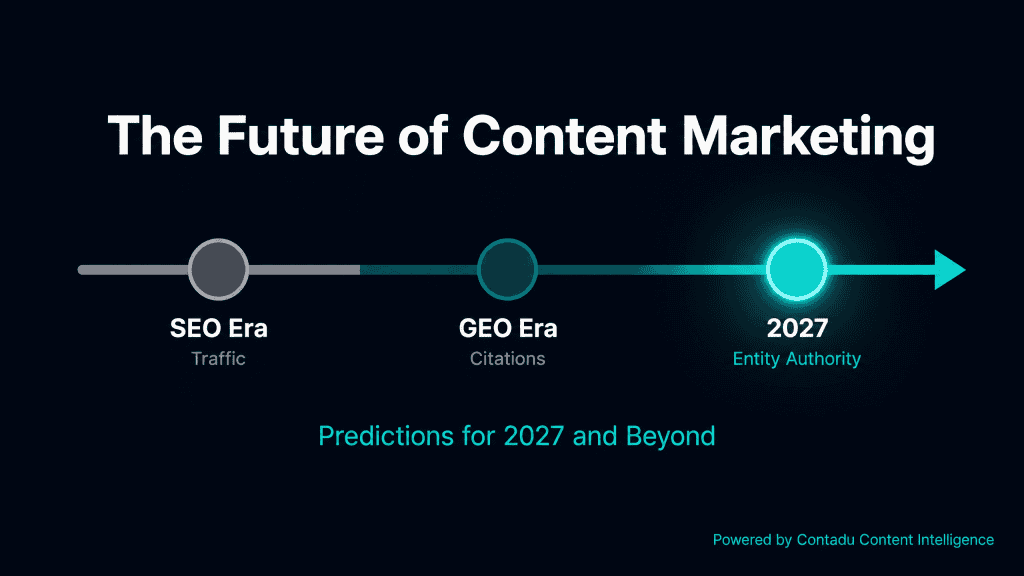
The Future of Content Marketing: Predictions for 2027 and Beyond
Semantic Summary The Idea: As we look toward 2027, the landscape of B2B content marketing is undergoing a seismic shift. The transition from Search Engine Optimization (SEO) to Generative Engine Optimization (GEO) is complete, and the focus has moved from traffic volume to Share of Model Voice (SOMV) and Entity Salience. The Challenge: Traditional content […]
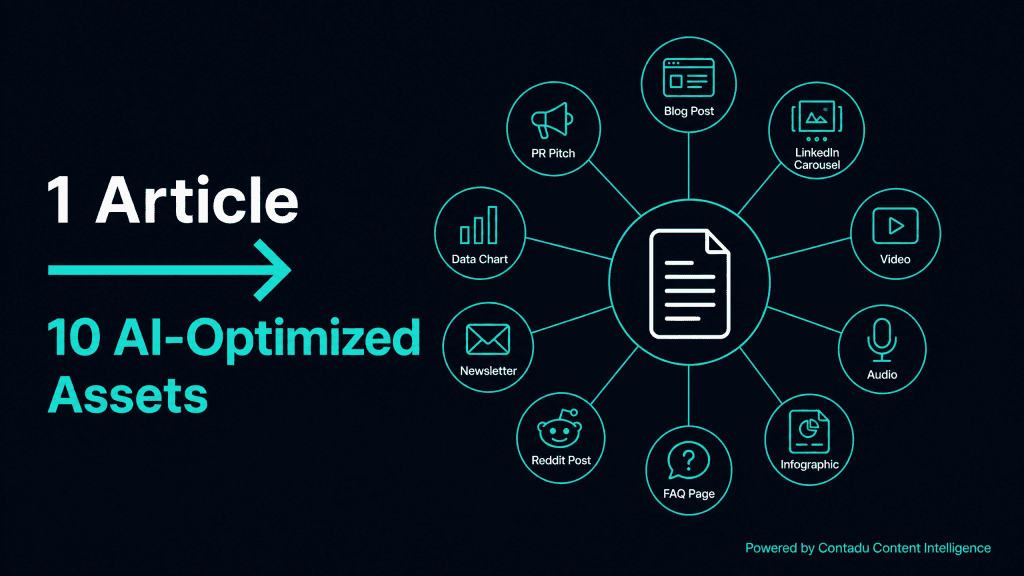
Content Repurposing for AI: Turn 1 Article into 10 AI-Optimized Assets · Contadu.
Semantic Summary The Idea: Writing a 2,500-word definitive guide and simply publishing it on your blog is no longer a viable content strategy. In the era of AI Answer Engines and fragmented buyer journeys, your target audience consumes information across multiple platforms, formats, and modalities. You must extract maximum value from every core asset you […]
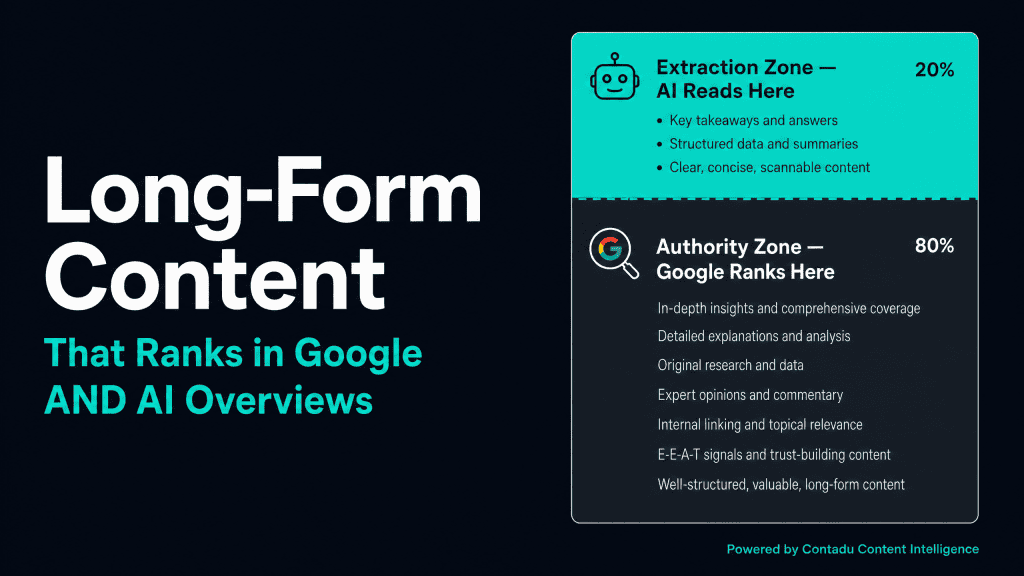
How to Write Long-Form Content That Ranks in Google AND AI Overviews · Contadu
📍 Semantic Summary Idea: We are currently in a hybrid search era. Content marketers face a difficult balancing act: they must write comprehensive, long-form content to satisfy traditional Google SEO algorithms (which still reward Topical Authority and depth), while simultaneously structuring that content for AI Answer Engines (which require brevity, front-loaded facts, and rapid extraction). […]