Semantic Summary Idea: Content provenance is the evidence trail behind a page. It shows where a claim came from, who created or reviewed it, when it was last checked, and what changed. It helps readers decide whether a page deserves trust. Challenge: Teams often publish useful content without a reliable record of its claims, sources, […]
The Impact of Core Web Vitals on LLM Rankings.
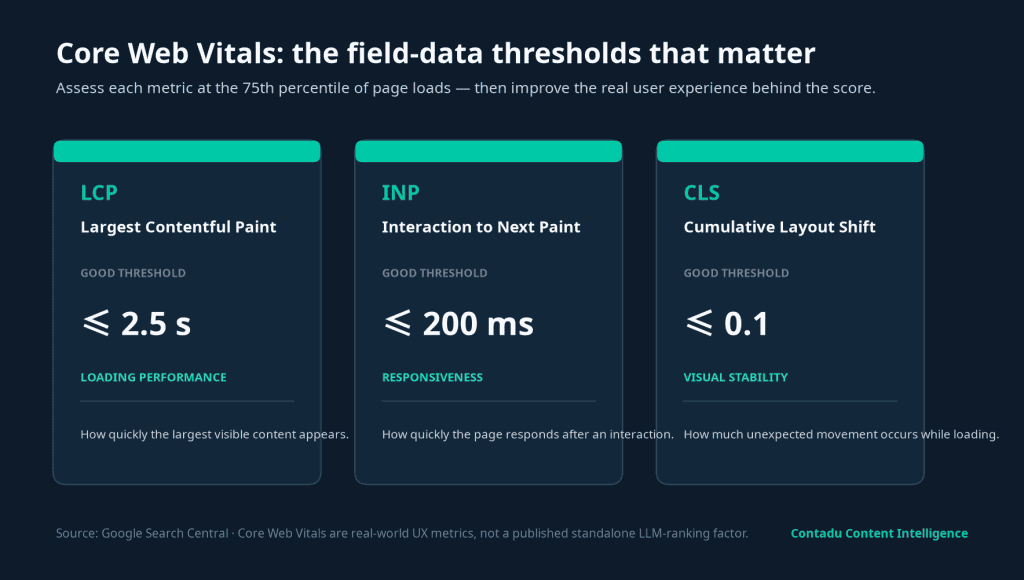
Semantic Summary Idea: Core Web Vitals are not a published standalone ranking or citation factor for large language models. They still matter because a fast, stable, crawlable website creates better conditions for Google Search, AI features, and visitors to access the content that demonstrates your expertise. Challenge: Teams often either dismiss web performance because it […]
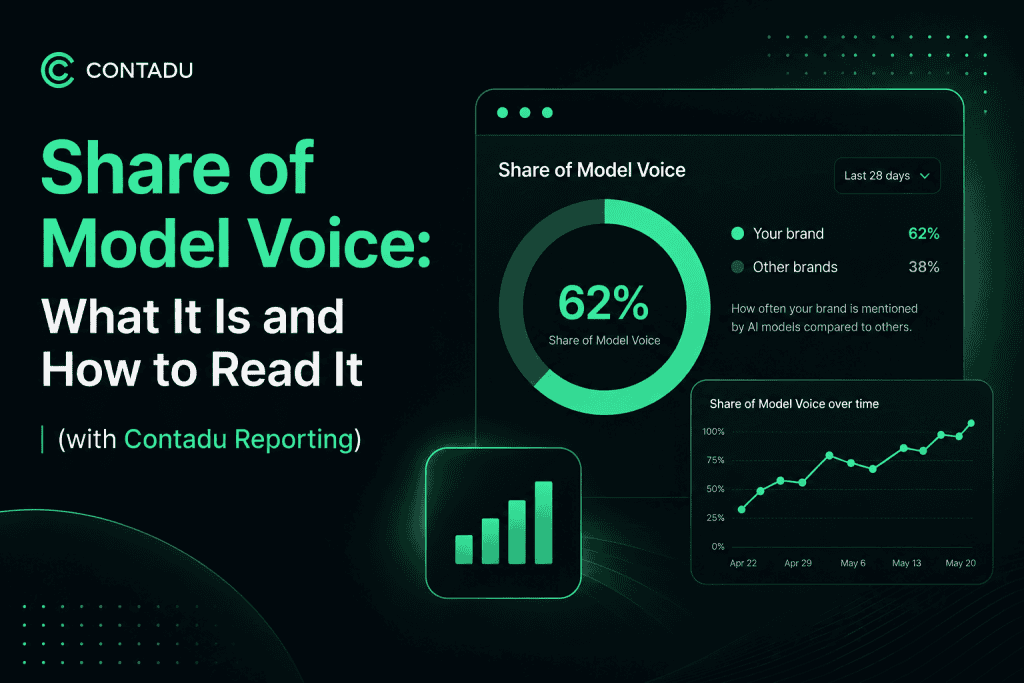
Share of Model Voice: What It Is and How to Read It (with Contadu Reporting)
Semantic Summary Idea: Share of Model Voice (also written as AI Share of Voice or AI SOV) is a brand visibility metric that measures how often an AI model mentions your brand versus competitors when it answers a category-relevant question. Challenge: most teams still report on pageviews and keyword rank, which say nothing about whether […]
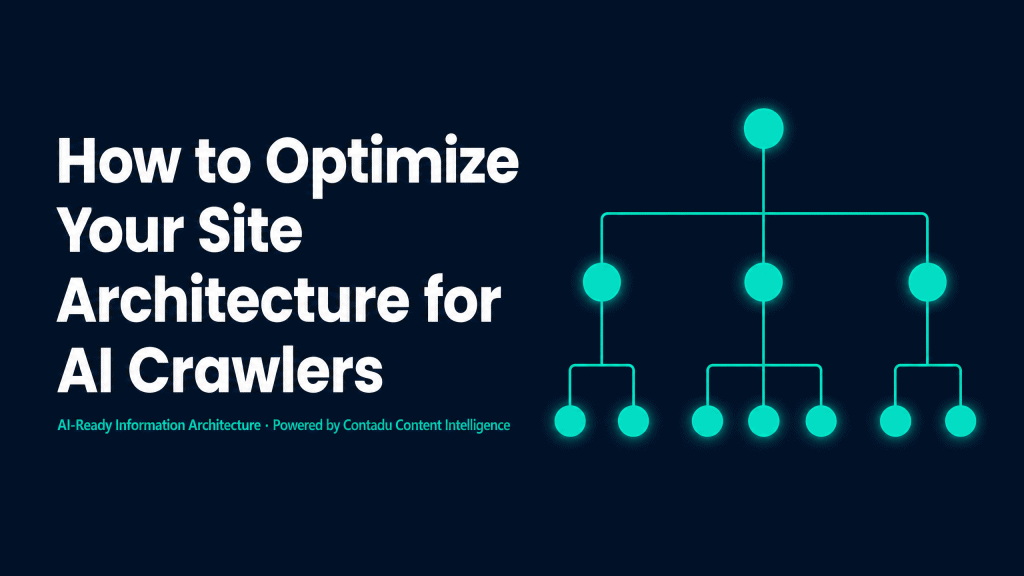
How to Optimize Your Site Architecture for AI Crawlers · Contadu
Semantic summary Idea: AI crawlers like ChatGPT’s OAI-SearchBot and Anthropic’s ClaudeBot operate under strict resource constraints. They prioritize flat, entity-rich architectures over deep hierarchies, and will abandon crawls of sites that bury their content more than three clicks from the homepage. Optimizing your site architecture for AI crawlers is now a prerequisite for LLM visibility. […]
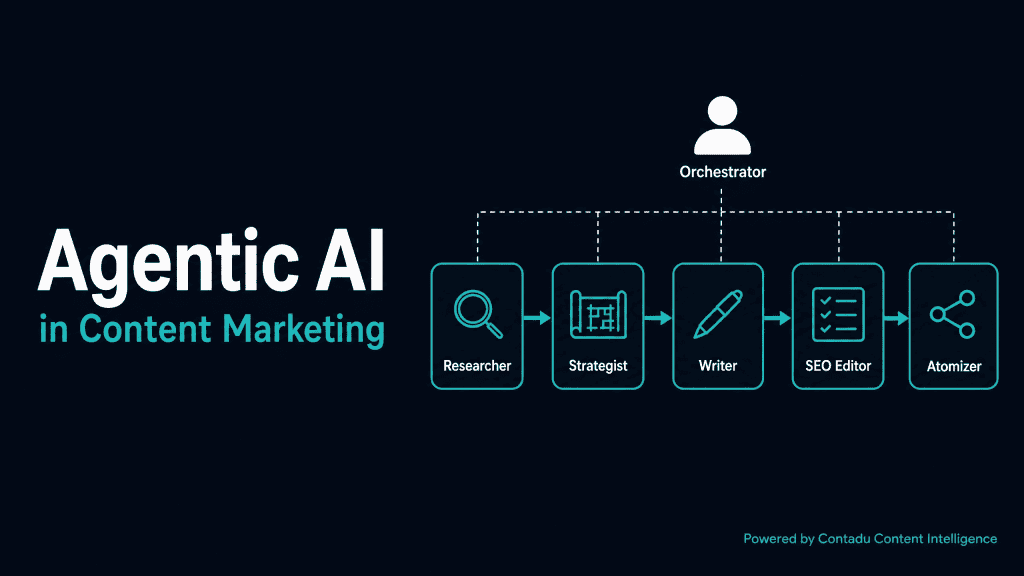
Agentic AI in Content Marketing: Orchestrating Multiple AI Assistants · Contadu.
Semantic Summary The Idea: The era of “prompt engineering” a single LLM like ChatGPT to write a blog post from start to finish is over. To achieve scale without sacrificing quality, B2B content teams must transition from single-prompt generation to Agentic AI workflows. The Challenge: When a single AI model is asked to research, outline, […]
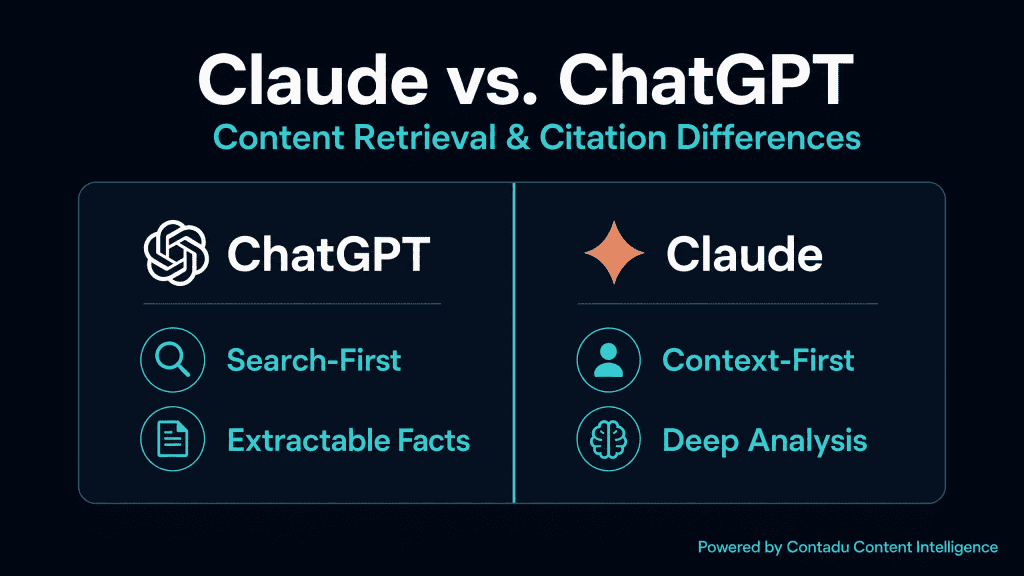
Claude vs. ChatGPT: Differences in Content Retrieval and Citation.
📍 Semantic Summary Idea: While both Claude and ChatGPT are powerful Large Language Models (LLMs), their approaches to Retrieval-Augmented Generation (RAG) and content citation differ significantly. Understanding these differences is crucial for a comprehensive Generative Engine Optimization (GEO) strategy. Challenge: Many content marketers assume that optimizing for ChatGPT automatically optimizes their content for Claude. However, […]
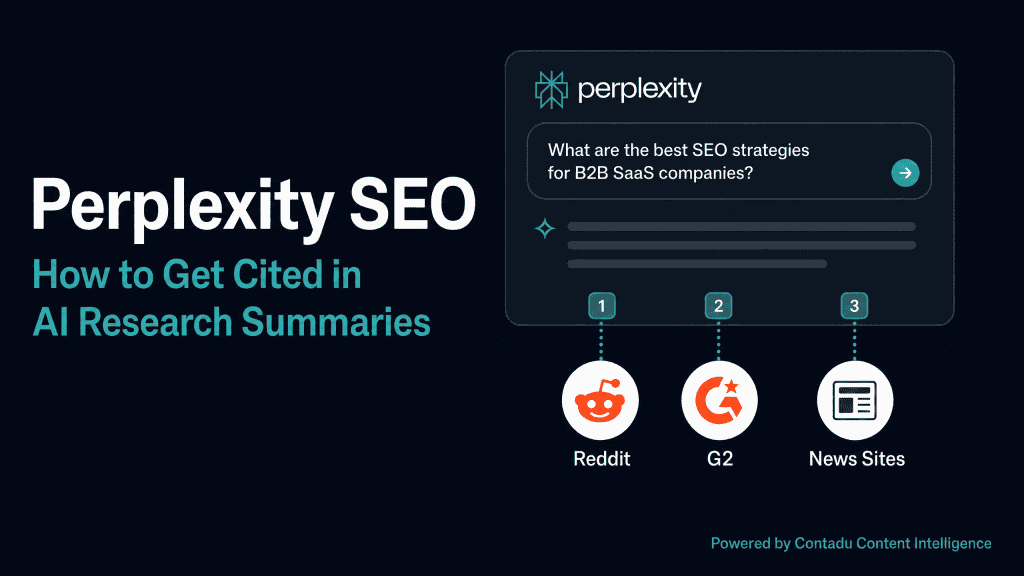
How to Write Content That AI Overviews Actually Quote.
📍 Semantic Summary Idea: Perplexity is fundamentally different from Google and ChatGPT. It is an “Academic” AI Answer Engine that prioritizes verified, third-party sources and earned media over brand-owned content. Perplexity SEO requires a shift from traditional on-page optimization to aggressive digital PR and third-party entity building. Challenge: Most B2B marketers try to rank in […]
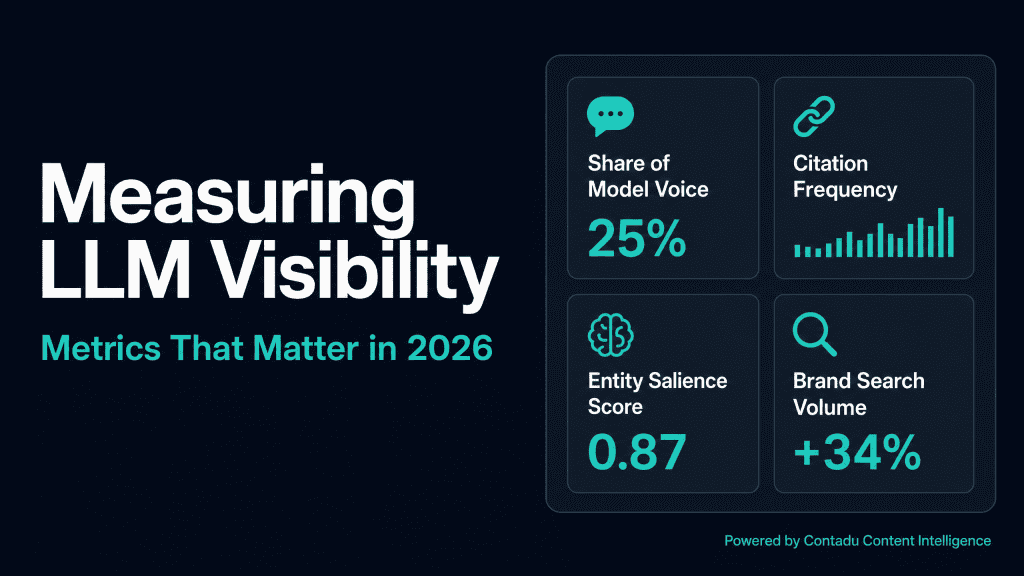
Measuring LLM Visibility: Metrics That Matter in 2026.
📍 Semantic Summary The Idea: Traditional SEO metrics like search volume, keyword rankings, and organic traffic are insufficient for measuring success in the era of AI Answer Engines. As zero-click searches become the norm, B2B marketers must adopt a new framework: LLM Visibility. The Challenge: How do you measure the ROI of your content when […]
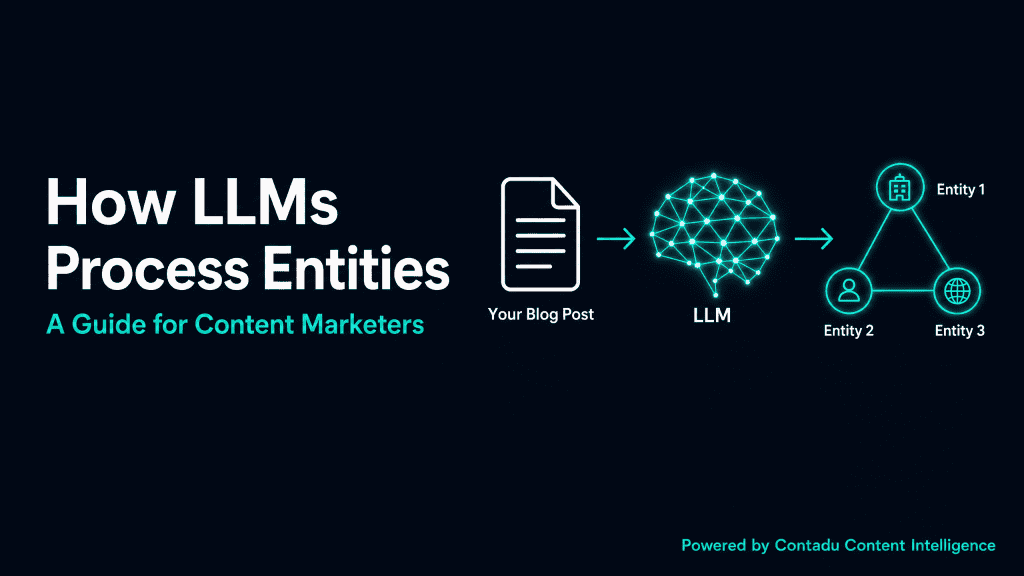
How LLMs Process Entities: A Guide for Content Marketers.
📍 Semantic Summary Idea: To rank in AI answer engines like ChatGPT and Perplexity, you must understand how Large Language Models (LLMs) process text. They do not read keywords; they map entities in high-dimensional vector space. Challenge: Content marketers are still writing for traditional search crawlers, focusing on keyword density and exact-match phrases. This approach […]
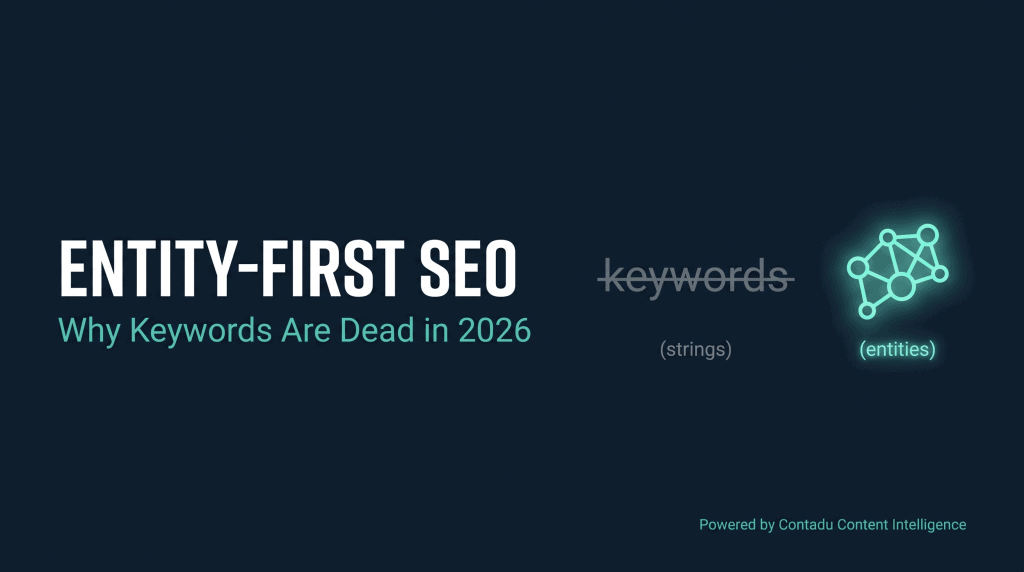
Entity-First SEO: Why Keywords Are Dead in 2026.
📍 Semantic Summary Idea: The era of optimizing content for exact-match keywords is over. In 2026, Google and AI answer engines rely on an entity-first SEO approach, prioritizing semantic relationships and Knowledge Graphs over traditional keyword density. Challenge: Many content marketers are still stuck in the “strings” mindset, building content around search volume rather than […]