Semantic Summary The Idea: Writing a 2,500-word definitive guide and simply publishing it on your blog is no longer a viable content strategy. In the era of AI Answer Engines and fragmented buyer journeys, your target audience consumes information across multiple platforms, formats, and modalities. You must extract maximum value from every core asset you […]
The B2B Buyer’s Journey in the Age of AI Search
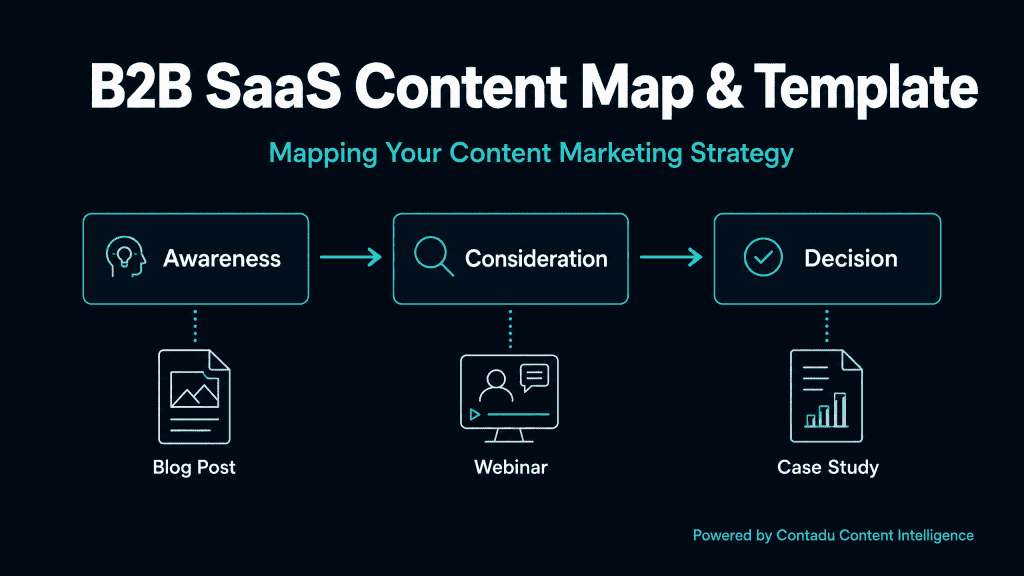
📍Semantic Summary The Idea: The traditional B2B marketing funnel Awareness, Consideration, Decision was built for a linear, Google-centric world. In 2026, the proliferation of AI Answer Engines (like ChatGPT, Claude, and Perplexity) has completely fractured this linear path. Buyers are no longer downloading whitepapers or filling out lead forms to get basic answers; they are […]
Brand Mentions as the New Backlinks in the AI Era.
📍 Semantic Summary Idea: For two decades, the hyperlink was the fundamental currency of the web. In 2026, Large Language Models (LLMs) have shifted the paradigm. AI Answer Engines do not need a clickable link to understand a relationship; they rely on Co-Occurrence and Entity Salience. Unlinked brand mentions in semantically relevant, high-authority contexts are […]
The Role of Digital PR in LLM Visibility.
“Listen to this article” 📍 Semantic Summary Idea: Traditional SEO relied on backlinks to build domain authority. In the era of AI Answer Engines (ChatGPT, Perplexity, Claude), the new currency of trust is Entity Salience built through Digital PR. Large Language Models (LLMs) evaluate the credibility of a brand by analyzing its co-occurrence with […]
Search Everywhere Optimization: Beyond Google in 2026.
📍 Semantic Summary Idea: The era of Google monopoly is over. In 2026, users discover B2B software through a fragmented ecosystem of AI answer engines (ChatGPT, Claude, Perplexity), social platforms (Reddit, LinkedIn), and specialized aggregators. Search Everywhere Optimization is the new framework for ensuring brand visibility across this decentralized landscape. Challenge: Most B2B marketing teams […]
Semantic Silos vs. Topic Clusters: Understanding the Difference in 2026.
📍 Semantic Summary Idea: While marketers use the terms interchangeably, Topic Clusters and Semantic Silos represent two distinct stages of content architecture evolution. Challenge: Building a Topic Cluster based solely on shared keywords creates a flat structure that fails to establish deep Topical Authority in the era of AI Answer Engines and Knowledge Graphs. Summary: […]
The “Barbell Strategy” for Content Marketing in 2026: Why the Middle is Dead
For the past decade, the standard playbook for B2B content marketing was remarkably consistent: hire a team of freelance writers, pay them $150 to $300 per article, and publish two or three 1,500-word posts every week. This approach created a massive “middle class” of content. It wasn’t terrible, but it wasn’t groundbreaking either. It was […]
The Customer Success Content Playbook: How to Write Your Way to Zero Churn
You just popped the champagne. The sales team closed a massive enterprise deal, the contract is signed, and the revenue is officially on the books. Marketing is celebrating the qualified lead, Sales is celebrating the commission, and the executive team is looking forward to the next quarter. But what happens next? In the vast majority […]
How to Build a “Dark Social” Distribution Engine: The Untrackable Path to Pipeline.
You just hit “publish” on a brilliant, 3,000-word piece of original research. Your distribution checklist is complete: you scheduled three LinkedIn posts, sent an email newsletter, and optimized the on-page elements for SEO. Two weeks later, the analytics show a steady trickle of organic traffic, but your pipeline remains flat. Then, during a sales call, […]
Autonomous Content Auditing: How to Clean Up 10,000 Pages in a Weekend
If your website has been around for more than three years, you likely have a content debt problem. Thousands of blog posts, landing pages, and product updates are sitting on your domain, slowly decaying. Some are cannibalizing your new content. Others are dragging down your overall site quality in the eyes of Google’s algorithms. Historically, […]