
Keyword Clustering: The Complete Guide (SERP-Based vs Semantic vs NLP)

Keyword clustering is the process of grouping related keywords that share the same search intent, so one page can target the whole group instead of one keyword per page. It pays off as soon as your keyword list grows past a few dozen terms: you publish fewer, stronger pages, avoid keyword cannibalization and build the topical depth that Google and AI search engines reward.
Key takeaways
- One cluster = one page. Every keyword cluster maps to a single page with one primary keyword and several secondary keywords.
- SERP-based clustering is the most accurate for existing demand, because it groups keywords that already show the same pages in Google search results. Semantic and NLP clustering are faster and work where SERP data is thin.
- Clusters feed your content strategy. Group keywords first, then map clusters to pages, topic clusters and briefs.
What is keyword clustering?
Keyword clustering is an SEO technique that groups keywords by shared meaning and search intent, so each group can be targeted by a single page. Instead of writing ten articles for ten keyword variations, you write one page that ranks for all of them.
Definition: A keyword cluster is a group of related search queries that a searcher would expect to be answered by the same page.
Clustering is the process that turns a flat list of keywords from your keyword research into a structure you can publish against, so every search term your audience uses has a home. The input is usually a CSV file exported from your keyword research tool or from Google Search Console. The output is a set of groups, each with a primary keyword, secondary keywords, combined search volume and a clear search intent.
What is a keyword cluster example?
Here is a simple word cluster example. These three keywords look different, but Google shows almost the same pages for each, so they belong in one cluster:
- keyword clustering
- what is keyword grouping
- how to group keywords for SEO
“Keyword clustering tool free”, on the other hand, has a different intent. The searcher wants a tool, not a guide, so it belongs in a separate cluster that points to a tool page.
Why is keyword clustering important for SEO?
Keyword clustering matters because search engines rank pages for topics, not for single strings. A page that covers a full cluster ranks for more related keyword variations, collects more traffic and sends clearer relevance signals than several thin pages. That is why clustering is one of the SEO best practices behind any solid SEO strategy.
- More rankings per page. A strong page often ranks for dozens or hundreds of related keywords. Clustering helps you plan for that on purpose.
- No keyword cannibalization. When two pages target the same intent, they compete in Google search results. Clustering assigns every keyword to exactly one page.
- Faster content planning. A list of 2,000 keywords becomes 150 clusters, and 150 clusters become a realistic editorial calendar.
- Topical authority. Covering every cluster in a topic shows search engines that your site is a complete resource on it.
- Better briefs. Each cluster gives the writer a primary keyword, secondary keywords and the questions the page must answer, so SEO writing starts from the best keywords, not guesses.
Why keyword clustering matters for AI search
AI search makes clustering more important, not less. Google AI Overviews and AI Mode split one question into many sub-queries (query fan-out) and cite pages that answer each sub-query cleanly.
A page built around a full cluster answers more of those sub-queries, so it has more chances to be cited by AI search engines, ChatGPT and other AI assistants. Think of each secondary keyword in a cluster as a question your page should answer in its own short, self-contained section.
What are the main types of keyword clustering?
There are three main types of keyword clustering: SERP-based, semantic and NLP (AI) clustering. A fourth, simpler method, lexical grouping, groups keywords by shared words. They differ in what data they use to decide that two keywords belong together.
SERP-based clustering
SERP clustering groups keywords when Google shows the same URLs for them. If two keywords share, for example, 3 or more of the top 10 results, the tool puts them in the same group. This SERP similarity is the most reliable signal of shared intent, because it reflects how Google itself understands the query.
- Pros: matches real search engine results pages; handles intent differences that words alone hide.
- Cons: needs a live SERP check for every keyword, so it costs credits and time; weaker for brand-new topics with few results.
Semantic clustering
Semantic clustering groups keywords by meaning. It uses language models to decide that “cheap running shoes” and “affordable trainers for jogging” mean the same thing, even with no shared words.
- Pros: fast, cheap, works for any keyword list and any language; good for new markets with little SERP data.
- Cons: can merge keywords with similar meaning but different intent, such as “keyword clustering” (guide) and “keyword clustering tool” (product).
NLP and AI clustering
NLP clustering turns each keyword into a vector (an embedding) and then runs a clustering algorithm, such as k-means or hierarchical clustering, to group the vectors. Modern AI clustering tools often combine embeddings with SERP data or an LLM that names and checks each group.
- Pros: scales to tens of thousands of keywords; flexible thresholds; easy to automate in Python.
- Cons: results depend on the model and settings; still needs a human check for search intent.
Lexical (word-based) grouping
Lexical grouping puts keywords together when they share words or word stems, for example every keyword containing “keyword cluster”. It is the fastest method and needs no SERP data, which makes it a good first pass on a large keyword list before a more precise method.
Keyword clustering methods compared
| Method | What it compares | Accuracy for intent | Speed and cost | Best for |
| SERP-based | Shared URLs in the top 10 results | Highest | Slower, uses SERP credits | Existing demand, competitive niches |
| Semantic | Meaning of the keywords | Medium to high | Fast, low cost | New topics, many languages |
| NLP / AI (embeddings) | Vector similarity plus a clustering algorithm | Medium to high, depends on settings | Fast at scale | Very large lists, custom workflows |
| Lexical | Shared words and stems | Basic | Instant, free | First pass, cleaning a raw list |
In practice, many SEO professionals combine methods: a lexical or semantic pass to clean and pre-group the list, then SERP clustering on the groups that drive the most search volume.
Keyword clusters vs topic clusters: what is the difference?
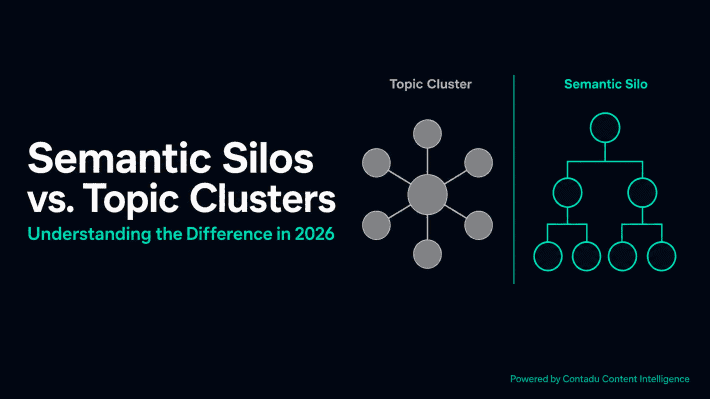
A keyword cluster is a group of keywords for one page; a topic cluster is a group of pages around one broad topic. Keyword clusters are the building blocks: several keyword clusters together form a topic cluster, with one pillar page for the broad keyword and cluster pages for each subtopic, all linked together.
| Keyword cluster | Topic cluster | |
| Unit | Keywords | Pages |
| Targets | One single page | A pillar page plus cluster pages |
| Goal | Rank one page for every keyword variation | Build topical authority across a subject |
| Example | “keyword clustering”, “how to group keywords” | Keyword research hub with pages on clustering, search intent, keyword difficulty |
How do you create keyword clusters?
To create keyword clusters, build a clean keyword list, run it through a clustering tool or script, check each group for search intent, then map every cluster to one page. Here is the full process.
- Start with seed keywords. List 5 to 20 broad seed keywords that describe your topic, products and audience.
- Expand them into a keyword list. For keyword discovery, use your keyword research tool, free tools such as Google Keyword Planner and Google Trends, or Google Search Console’s Performance report to pull related keywords, search volume and keyword difficulty. Export everything to a CSV file.
- Clean the list. Remove duplicates, off-topic and branded terms, and keywords with no search volume unless they are strategic. Keep columns for keyword, search volume, keyword difficulty and intent.
- Choose a clustering method. Use SERP-based clustering for a competitive niche, semantic or NLP clustering for a large or multilingual list, and lexical grouping for a quick first pass.
- Run the clustering tool. Paste or upload the list, set the strictness (for SERP clustering, how many shared URLs make a match) and run it. Stricter settings create more, smaller clusters. In Contadu’s free Keywords Grouper you set the number of clusters and move the matching slider from extra strict to extra broad; in the Content Strategy module, keyword clustering runs on topic-related suggestions automatically, so you don’t have to build the list by hand.
- Review every cluster for search intent. Check the search engine results for the top keyword in each group. If Google shows guides, plan a guide; if it shows tools or product pages, plan that instead. Split clusters that mix intents.
- Pick a primary keyword and secondary keywords. The primary keyword is usually the one with the highest search volume and clearest intent. The rest become secondary keywords and H2 or FAQ ideas.
- Map clusters to pages. Assign each cluster to an existing page or a new one. If two existing pages target the same cluster, merge them. Contadu’s topical map shows how well your site covers each keyword cluster compared with competitors, so content gaps and overlaps are visible at a glance.
- Brief, publish and track. Turn each cluster into a content brief (in Contadu, you can then write the page in the Content Writer, which gives real-time semantic recommendations), publish, then track ranking for the whole cluster, not only the primary keyword, in Google Search Console or your rank tracker.
Worked example: 10 keywords into 3 clusters
Below is a small keyword list for a content marketing site, grouped by shared intent:
| Cluster (primary keyword) | Keywords in the group | Intent | Page type |
| keyword clustering | keyword clustering, what is keyword clustering, how to group keywords, keyword grouping seo | Informational | Guide |
| keyword clustering tool | keyword clustering tool, free keyword clustering tool, keyword grouper | Transactional | Tool page or best-of list |
| topic cluster | topic cluster, pillar page, topic cluster model | Informational | Guide |
Notice that “keyword clustering” and “keyword clustering tool” share most of their words but end up in different clusters. A purely lexical method would merge them; SERP data or a human intent check keeps them apart.
Common keyword clustering mistakes
The most common mistake is trusting the clustering tool without checking search intent. Watch for these as well:
- Clusters that are too broad. One giant group for a whole topic turns into an unfocused page. Tighten the threshold.
- Clusters that are too narrow. Separate pages for near-identical keyword variations cause keyword cannibalization.
- Ignoring existing pages. Map clusters to the content you already have before creating new pages.
- Choosing the wrong primary keyword. The highest search volume keyword is not always the best; pick the one that matches the intent of the page.
- Clustering once and never again. SERPs change. Re-run clustering for key topics every 6 to 12 months.
Which keyword clustering tool should you use?
The best keyword clustering tool depends on your list size, budget and how much accuracy you need. Free SEO tools are fine for a first pass; SERP-based or semantic tools pay off for client work and large sites.
| Tool or approach | Method | Best for |
| Contadu Keywords Grouper | Lexical (shared subwords and text distance), adjustable from extra strict to extra broad | A free first pass, 60+ languages, no login |
| Contadu Content Strategy (paid) | NLP keyword clustering with topical map, content gap analysis and content plan | Content teams and agencies that plan, write and report in one place |
| Dedicated SERP-based clustering tools | SERP similarity (shared URLs in the top 10) | SEO teams that need the highest intent accuracy and have a budget for SERP credits |
| Google Search Console + a spreadsheet | Manual grouping of the queries a page already ranks for | Small sites and auditing existing content, free |
| Python (open-source libraries: sentence-transformers, scikit-learn) | NLP, custom embeddings and clustering algorithm | Technical SEOs with very large lists, free |
A practical workflow: use the free Contadu Keywords Grouper to pre-group and clean a raw list, then run the groups that matter most through SERP-based or semantic clustering before you brief writers.
How Contadu helps you turn keyword clusters into content
Contadu takes you from a raw keyword list to published, optimized pages in one workflow: cluster, map gaps, plan, write and report. Here is how each step of this guide maps to Contadu:
- Quick first pass, free: paste your list into the Keywords Grouper. It groups keywords by shared words in 60+ languages, with no login.
- Keyword clustering at scale: the Content Strategy module gathers topic-related keyword suggestions into keyword clusters and shows keyword metrics, so you can see which clusters are worth targeting.
- Map clusters to pages: the topical map compares your coverage of each cluster with competitors and highlights content gaps, which helps you decide what to create, update or merge.
- Plan content: Contadu generates a content plan with content ideas for each keyword cluster, based on competitive analysis.
- Write and optimize: the Content Writer gives real-time semantic recommendations, and team features (unlimited team members, WordPress integration, Chrome extension) keep writers, editors and SEO specialists in one workflow.
Want to try it on your own keyword list? Start with the free Keywords Grouper, then start a 7-day free Contadu trial to run full keyword clustering and content planning.
FAQ
What is keyword clustering in SEO?
Keyword clustering in SEO is the practice of grouping related keywords with the same search intent so that one page targets the whole group. It helps a page rank for many keyword variations at once and prevents several pages from competing for the same query.
What is a word cluster example?
A word cluster example is “running shoes for flat feet”, “best shoes for flat feet running” and “flat feet running shoes”. They use different words, but Google shows the same pages for them, so one page should target all three.
What is an example of clustering?
Outside SEO, clustering means grouping similar items, such as customers with similar buying habits. In keyword research, an example of clustering is turning a list of 500 keywords into 40 groups, each assigned to one page on your site.
What are the four types of keywords?
The four types of keywords by search intent are informational (learn something), navigational (find a specific site), commercial (compare options) and transactional (buy or sign up). A good keyword cluster contains keywords of only one type.
Does keyword clustering work?
Yes. Keyword clustering works because Google ranks pages for groups of related queries, not single keywords. Pages built around a full cluster usually rank for more terms and are easier to keep up to date than many thin pages.
How many keywords should be in a keyword cluster?
There is no fixed number. A cluster can hold 2 keywords or 200; what matters is that all of them share one search intent and can be answered on a single page. If a cluster needs several distinct sections that each deserve their own page, split it.
Can keyword clusters prevent keyword cannibalization?
Yes. Because every keyword is assigned to exactly one cluster and every cluster to one page, two pages never target the same intent. Running clustering on your existing pages is also a quick way to find cannibalization you already have.
Is there a free keyword clustering tool?
Yes. Contadu’s Keywords Grouper is free and needs no login; it groups keywords by shared words in 60+ languages. Several SERP-based tools also offer free trials or small free limits.
Can I use keyword clustering to optimize older content?
Yes. Pull the queries an old page already ranks for from Google Search Console, cluster them, and check which cluster the page actually serves. Add sections for missing secondary keywords and move off-topic queries to a better-matching page.
Can I cluster keywords in Python?
Yes. A common approach is to create embeddings with a library such as sentence-transformers and group them with k-means or agglomerative clustering from scikit-learn. Python gives you full control, but a no-code clustering tool is faster for most teams.