
How to Build a B2B Newsletter That Drives Pipeline
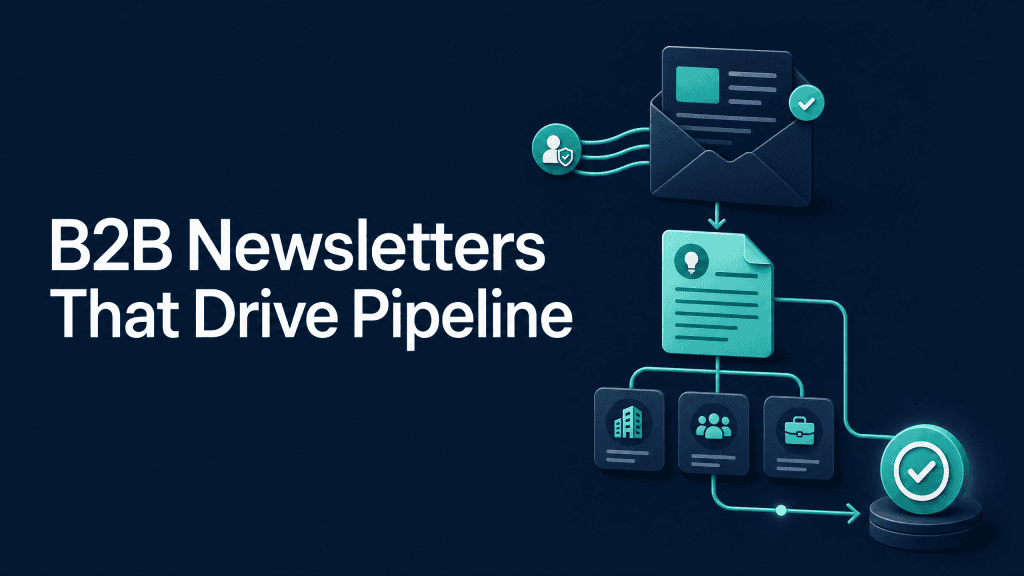
Idea: A B2B newsletter can support pipeline when it helps a defined reader solve a current problem, points to one useful next step, and feeds meaningful context back to marketing and sales.
Challenge: Many newsletters are link roundups sent to a broad list. They may produce opens or clicks, but the team cannot explain what the reader learned, what happened next, or whether the programme helped a real buying conversation.
Solution: Treat the newsletter as a recurring editorial product. Build it around a clear audience promise, a small number of useful segments, content that matches a buyer question, and a measurement model that separates email activity from commercial outcomes.
Related Reads
- How to Build a “Dark Social” Distribution Engine: The Untrackable Path to Pipeline
- Content Distribution: The AI-Powered Playbook Beyond “Publish and Pray”
- Creating BoFu Content That Actually Converts: The B2B Guide
A B2B newsletter drives pipeline when it helps the right people take a useful next step in a buying journey. It is not a weekly list of company news. It is a content product with a reader promise, an editorial point of view, and a path to deeper material.
How B2B Email Marketing Drives Pipeline
Most B2B newsletters fail because they are designed as broadcasts instead of reader services. They promote several unrelated links, speak to everyone on the list, and ask readers to book a demo before they have learned something useful. This creates activity, but rarely a repeatable path to pipeline.
Creating a B2B Newsletter: An Editorial Product, Not a Link Roundup
An editorial product makes a clear promise. It might help operations leaders make better process decisions, help marketing teams interpret a changing search landscape, or help product teams explain complex features. The promise tells a subscriber why this newsletter belongs in their inbox next week.
Use a consistent format so readers know what to expect. For example, each issue can include one practical point of view, one evidence-backed example, one link to a deeper resource, and one next step. The format can evolve, but it should not feel like a different publication every time.
Pipeline Is a Commercial Outcome, Not an Email Metric
An open, click, or reply is an email signal. A qualified opportunity is a potential deal that a sales team has reviewed. These are not the same thing. Email engagement can show that content is relevant; it cannot, by itself, prove revenue impact.
Define the relationship between newsletter engagement and pipeline before you report it. For example, a company may classify an opportunity as email-sourced when a newsletter signup or newsletter-driven conversion created the first known contact. It may classify an opportunity as email-influenced when a known contact engaged meaningfully with newsletter content before a sales opportunity was created or progressed. These are internal reporting definitions, so document them and apply them consistently.
Start With One Reader Question Per Send
The strongest newsletter issues usually answer one question. “How should we audit duplicate content after a site change?” is more useful than “Here are five things we published.” One clear question helps you choose the right segment, headline, content asset, and call to action.
It also makes the newsletter easier to reuse. The core idea can become a short social post, a sales follow-up, a customer education note, or a section inside a larger content hub. That is why newsletter planning belongs inside the wider content distribution system, rather than sitting as a separate weekly task.
Build the Foundation Before You Send
Build the audience, promise, and operating cadence before you design an email template. A polished template cannot compensate for an unclear audience or a team that has no reliable way to create useful content every week or month.
Define the Newsletter Audience and Promise
Start with one primary audience. In B2B, this is usually a role facing a recurring job or decision, not a vague industry category. For example, “content leaders who need to prove the business value of SEO” is more actionable than “marketing professionals.”
Building a B2B newsletter starts with a healthy email list of people who expect to hear from you. B2B marketers at B2B companies should use the newsletter to build trust, not to increase send volume. The best B2B marketing strategies connect every email campaign to a useful reader question; marketing automation can then support timely delivery without making the message generic.
Then write a one-sentence promise. It should explain what the reader will receive, how often, and why it is useful. Avoid promises that focus only on your company. “A practical weekly note on content decisions that improve discoverability and conversion” is stronger than “News from our team.”
Choose Two or Three Useful Segments
Segmentation means sending a more relevant version of an email to a defined group. Begin with two or three segments that genuinely change the content or next step. Good starting points include role, current problem, relationship stage, or product context.
Do not create dozens of segments without evidence they need different information. A small, well-maintained group is better than slightly altered versions of one generic email.
Set a Cadence Your Team Can Sustain
Choose a monthly, twice-monthly, or weekly cadence based on what your team can produce and review well. One thoughtful monthly issue is better than a weekly schedule filled with weak content.
Use a simple rhythm: choose the question, check sources, draft, review links and audience, collect feedback, and learn from performance. This prevents last-minute newsletter production.
Design a B2B Newsletter That Moves a Reader Forward
Every issue should make one useful offer of progress. The next step may be to read a guide, use a template, watch a short explanation, reply with a question, or speak to an expert. It should fit the reader’s current level of interest, not your quarterly sales target.
Use a Repeatable Newsletter Format
A practical newsletter format creates editorial discipline. It also helps readers scan the message quickly. A simple structure is: a sharp subject line, a short opening that states the problem, one main insight, one supporting example, one content link, and one clear call to action.
Write subject lines that accurately describe what the reader will receive. The FTC’s US guidance on commercial email requires accurate header information and non-deceptive subject lines; it also applies to B2B commercial messages. This article is not legal advice, so check the rules that apply to your region, audience, and type of message.
Match the Main Asset to the Buyer’s Current Question
Early-stage readers usually need a clear explanation of a problem. Middle-stage readers may need a framework, comparison, or implementation guide. Later-stage readers may need evidence, a detailed process, or a way to reduce risk. Matching the asset to the question is more important than promoting the newest piece of content.
| Reader situation | Main newsletter job | Useful content asset | Appropriate next step | Signal to review |
| Early-stage reader with a defined problem | Name the problem and teach a useful first step. | Explainer, checklist, or original insight. | Read the full guide or save the checklist. | Qualified visits, replies, and return engagement. |
| Reader comparing approaches | Help them evaluate trade-offs without hiding limitations. | Framework, comparison page, or implementation guide. | Use a planning template or explore a relevant solution page. | Visits to evaluation content and stakeholder sharing. |
| Active buying team | Reduce a specific evaluation concern. | Case study, security note, process explanation, or ROI model. | Ask a focused question or continue an existing conversation. | Sales-confirmed relevance and opportunity progress. |
| Existing customer | Increase adoption and help the customer get more value. | Use case, product education, or advanced workflow guide. | Try a relevant workflow or join an education session. | Product usage, feedback, and expansion conversations. |
Effective B2B Emails Need One Clear Next Step
One main call to action does not mean every reader must book a meeting. For many subscribers, the right step is a deeper article or practical template that continues their learning.
For readers near an active decision, a direct next step can support the bottom-of-funnel content on your site. Keep it relevant: do not send a late-stage offer to someone who asked only for basic education.
Connect Newsletter Content to the Buying Journey
A B2B newsletter works best when it respects different stages of understanding. B2B purchases often involve several people, longer review cycles, and different information needs. A useful newsletter gives each reader a reason to keep learning without pretending every click signals immediate buying intent.
Early Stage: Name the Problem Clearly
At the beginning of a journey, readers are often trying to describe the problem accurately. Use short, practical education. Explain the cost of doing nothing, show common mistakes, and offer a framework that helps them discuss the issue internally.
A strong early-stage issue might link to a guide on content distribution or a checklist that makes a complex task more manageable. The reader should leave with a clearer view of the problem, not a premature sales pitch.
Middle Stage: Help Readers Compare Approaches
When a reader understands the problem, they need help evaluating options. This is the stage for frameworks, comparison content, templates, and clear examples of decision criteria. Be honest about trade-offs. That builds more trust than pretending your preferred approach is right in every situation.
Use the newsletter to point to content that makes evaluation easier. The goal is to help a buyer form better requirements, not to force a demo request through generic urgency.
Later Stage: Support Long B2B Sales Cycles
Later-stage readers may want evidence that a proposed change can work in their situation. Send material that answers a specific risk: implementation effort, workflow fit, governance, measurement, or expected adoption. Keep this content close to the questions sales teams actually hear.
Newsletter content should support sales context. A conversation is stronger when the team knows which resource a buyer used and why. See Contadu guide to the B2B buyer’s journey for decision-stage guidance.
Build a B2B Newsletter Workflow Between Content, Marketing, and Sales.
Newsletter pipeline contribution improves when teams share context, not just contact scores. Marketing needs to know which sales questions deserve content. Sales needs to know what a newsletter issue was meant to help a reader understand. Content needs feedback about which explanations were useful or unclear.
Plan the Editorial Calendar From Real Questions
Collect questions from sales calls, onboarding, customer success, product education, and search research. Group them by recurring decision rather than by department. Then choose the few questions that are both useful to the audience and connected to your content strategy.
This prevents the newsletter from becoming a channel that only amplifies internal announcements. It also gives you a way to decide whether an issue needs a new article, a refresh of an existing page, or a short editorial answer.
Define Meaningful Intent Signals
Not every action deserves the same response. A download from a relevant account, repeat visits to an implementation guide, or a reply asking a specific question can be meaningful context. A single open is usually weak evidence on its own, especially because open tracking is imperfect.
Google’s sender guidance notes that open rates are not a reliable standalone indicator of deliverability. Treat opens as a limited engagement signal, then combine them with the reader’s segment, content consumed, and any sales-verified context.
Share Context, Not Just a Contact Score
When marketing shares newsletter activity with sales, include the issue, segment, reader question, asset clicked, and suggested follow-up. This helps sales decide whether outreach would be useful or intrusive.
For example, “This person clicked our technical implementation guide twice” is more actionable than “Their score increased by five points.” The first statement tells a salesperson what the reader may care about and offers a respectful starting point for a conversation.
Measure Pipeline Metrics and Newsletter ROI Honestly
Measure the newsletter as one part of a longer content and sales journey. A defensible report separates delivery and engagement data from pipeline data, explains the rules used for attribution, and includes what the team learned from the result.
Separate Leading Signals From Commercial Signals
Leading signals help you improve the newsletter: subscriber quality, delivery, unsubscribe reasons, clicks to high-value assets, replies, and return visits. Commercial signals help you assess business contribution: new contacts from newsletter content, sales-reviewed opportunities, progression of engaged accounts, and revenue outcomes where your attribution rules support that conclusion.
Review both signal types. Do not turn clicks into revenue or hide delivery issues behind a pipeline number. Explain where the connection is uncertain.
Define Email-Sourced and Email-Influenced Pipeline
Write down the definition used by your team. An email-sourced opportunity might require the newsletter to create the first identifiable contact or conversion. An email-influenced opportunity might require one or more meaningful newsletter engagements before an opportunity was created or moved forward.
Apply the same rules across campaigns. If the definition changes, label the change so that reports remain comparable. This avoids the common mistake of claiming pipeline impact from any deal that happened to receive an email.
Run a Measurable Pipeline Learning Review
Each month, review which questions earned useful responses, which assets attracted qualified engagement, and what sales teams learned. Keep the learning specific: “Readers responded to implementation examples” is more useful than “engagement increased.”
This review should feed the content calendar. It can also inform broader programmes such as your dark social distribution strategy, where shared links and private conversations can influence a buying journey without fitting neatly into a last-click report.
Protect Trust and Deliverability
A newsletter cannot support pipeline if readers do not trust it or cannot receive it. Useful content, clear sender identity, appropriate consent, and a simple opt-out process are foundational. They are not administrative details to add after the editorial work is complete.
Send to People Who Expect Your Email
Build a permission-based list and set clear expectations at signup. Do not purchase addresses or add people who did not expect to hear from you. Google recommends sending to recipients who want the mail and making it easy for them to unsubscribe.
Keep Sender Details, Subject Lines, and Links Clear
Use an accurate sender name, a domain readers can recognize, and subject lines that match the content of the message. Make links clear about where they lead. Avoid disguising promotional content as a reply, alert, or account notice.
Make Opt-Out Easy
A clear opt-out process respects the reader and protects the programme. The FTC says commercial email covered by CAN-SPAM must include a clear way to opt out, and that opt-out requests must be honoured promptly. Review your own legal obligations rather than relying on a general article for compliance decisions.
How Contadu Helps Build a Newsletter Content System
Contadu helps teams make the newsletter a reliable extension of their content strategy. Use content intelligence to find relevant topics, map a reader question to search intent, and identify existing material that can be turned into a focused newsletter issue. This gives each send a stronger purpose than “share the latest post.”
Contadu can also support the workflow around the issue: prepare a brief, check topic coverage, identify internal links, find related content for a nurture path, and prioritise pages that need a refresh before they are promoted. Over time, the newsletter becomes a feedback channel for your content system: it shows which questions readers engage with, which assets deserve a deeper update, and where the next useful piece of content should go.
Frequently Asked Questions
What is a B2B newsletter?
A B2B newsletter is a recurring email publication for people who make or influence business decisions. A useful one has a clear audience, a reliable editorial promise, and content that helps readers solve a relevant work problem instead of simply promoting company news.
How can a newsletter generate B2B pipeline?
A newsletter can support pipeline by educating the right audience, helping readers evaluate a problem, guiding them to relevant resources, and sharing meaningful context with sales teams. It does not create pipeline automatically; the team needs documented rules for what counts as email-sourced or email-influenced activity.
What should a B2B newsletter include?
Include one main reader question, a direct answer or point of view, a useful content asset, and one clear next step. Add supporting items only when they reinforce the same theme. A short, relevant issue is usually more useful than a long list of links.
How often should a B2B company send a newsletter?
Choose a cadence your team can sustain without lowering quality. Monthly or twice-monthly publishing is often a good starting point when a team needs time to source, write, review, and learn from each issue. Increase frequency only when you can maintain relevance and clear expectations.
What is the difference between email-sourced and email-influenced pipeline?
Email-sourced pipeline generally means the newsletter helped create the first known contact or conversion connected to an opportunity. Email-influenced pipeline means a known contact engaged with newsletter content before an opportunity was created or progressed. Define both terms for your own organisation and use the definitions consistently.
How many segments should a B2B newsletter have?
Start with two or three segments that require meaningfully different content, such as role, buying stage, or product context. Add segments only when you can explain how the reader’s question, asset, or next step will change. Too many segments often create operational complexity without improving relevance.
Which newsletter metrics matter beyond opens and clicks?
Review delivery, quality of subscribers, clicks to relevant assets, replies, return visits, sales-confirmed interest, opportunity creation, and opportunity progression under a documented attribution model. Open rate can be a limited engagement signal, but it should not be treated as proof of deliverability or pipeline impact.