
How to Write Content That AI Overviews Actually Quote.
📍 Semantic Summary
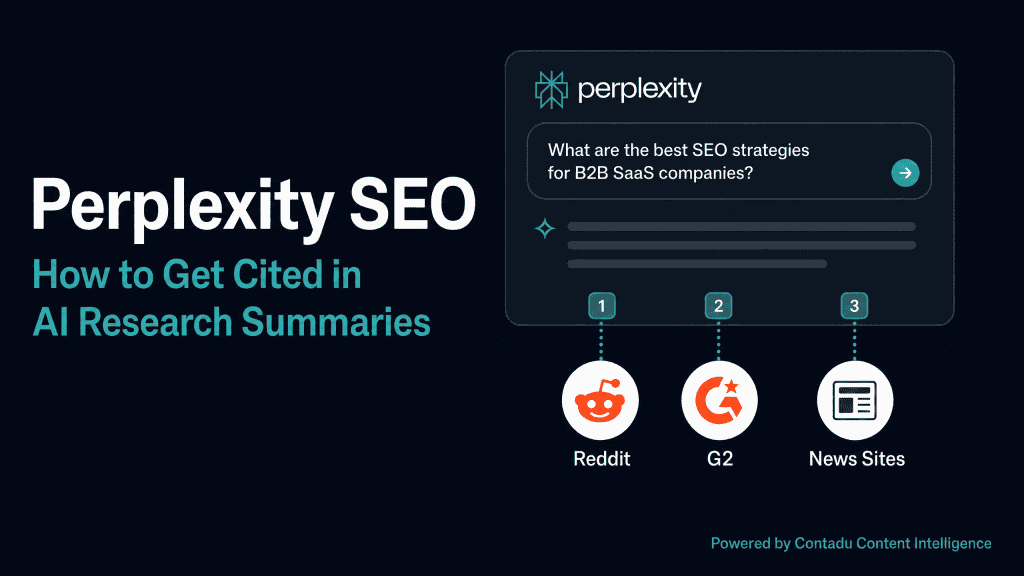
Idea: Perplexity is fundamentally different from Google and ChatGPT. It is an “Academic” AI Answer Engine that prioritizes verified, third-party sources and earned media over brand-owned content. Perplexity SEO requires a shift from traditional on-page optimization to aggressive digital PR and third-party entity building.
Challenge: Most B2B marketers try to rank in Perplexity by publishing long-form content on their own domains. However, Perplexity’s multi-layer reranking system actively filters out biased, vendor-owned content when answering comparative or transactional queries.
Summary: To get cited in Perplexity in 2026, you must optimize your Knowledge Graph presence, secure mentions on high-authority domains (like Reddit, G2, and industry publications), and structure your own content to act as primary research data. This guide outlines the exact Generative Engine Optimization (GEO) tactics for Perplexity.
Read the full guide below, or explore related topics:
- GEO 2.0: Advanced Tactics to Get Cited by AI Engines
- Measuring LLM Visibility: Metrics That Matter in 2026
- Zero-Click Search Strategy: How to Gain Visibility When No One Clicks
If Google is the world’s librarian and ChatGPT is the world’s brainstorming partner, Perplexity is the world’s research assistant.
For B2B buyers conducting complex vendor research, Perplexity has become the engine of choice. It doesn’t just generate text; it actively browses the web, synthesizes multiple viewpoints, and—most importantly provides rigorous, footnote-style citations for every claim it makes.
However, the strategy to get cited in Perplexity is drastically different from traditional SEO. If you try to use the Google playbook here, you will fail. This is the complete guide to Perplexity SEO in 2026.
How Perplexity Evaluates Sources (The “Academic” Bias).
To optimize for Perplexity, you must understand its retrieval bias. We call Perplexity the “Academic” engine because it inherently distrusts primary sources when evaluating a product or brand.
If a user asks Perplexity, “What is the best content intelligence platform?”, the engine will almost never cite Contadu.com’s own homepage saying, “We are the best.” It views vendor-owned content as biased.
Instead, Perplexity uses a Retrieval-Augmented Generation (RAG) system coupled with a strict reranking algorithm to find objective, third-party validation. It looks for:
- Aggregators and Review Sites: G2, Capterra, TrustRadius.
- User-Generated Content (UGC): Reddit, Quora, specialized Slack/Discord communities (if indexed).
- Independent Journalism: Industry news sites, analyst reports (Gartner, Forrester), and high-authority blogs.
To win in Perplexity SEO, your primary battleground is not your own website. It is the rest of the internet.
Strategy 1: The “Surround Sound” Digital PR Method.
Because Perplexity favors third-party validation, your most effective GEO tactic is Digital PR. You must create a “surround sound” effect where your brand entity is consistently mentioned alongside your target topics across high-trust domains.
Optimize Your Review Profiles.
Perplexity frequently pulls feature comparisons and sentiment analysis directly from G2 and Capterra. You must actively manage these profiles.
- Ensure your feature lists are exhaustive and use exact industry terminology.
- Encourage customers to mention specific use cases in their reviews (e.g., “Contadu is great for semantic entity audits” rather than just “Contadu is great”).
Dominate Reddit and Quora
Perplexity heavily indexes Reddit for unfiltered user opinions. If your brand is not part of the conversation in relevant subreddits, you are invisible to Perplexity for bottom-of-funnel queries.
You do not need to spam links. You need your brand name to co-occur naturally in discussions about solutions in your industry. The LLM processes the text association, not the hyperlink.
Strategy 2: Publish Primary Data (The Only Way to Rank Your Own Domain)
If Perplexity distrusts vendor domains for opinions, what does it trust them for? Data.
Perplexity is a research engine. If you publish original research, proprietary statistics, or unique survey data, Perplexity will cite you as the primary source of that data.
The Tactic: Shift your content strategy from “summarizing what others have said” to “publishing what others will cite.”
- Publish annual “State of the Industry” reports.
- Anonymize and aggregate your platform’s usage data to reveal trends.
- Create data-heavy benchmark studies.
When a user asks Perplexity for statistics on a specific trend, the engine will bypass the aggregator sites and link directly to your original research report.
Strategy 3: Optimize for the “Follow-Up” Query.
Perplexity’s interface is built around conversational follow-ups. After answering an initial question, it suggests related questions.
You can optimize for these follow-up queries by structuring your content with extreme semantic clarity.
The “Atomic Unit” Content Structure
Do not bury answers in long paragraphs. Use the Inverted Pyramid structure. Answer the question immediately, concisely, and authoritatively in the first sentence of a section. Then provide the context.
Example of poor structure: “When looking at the history of semantic search, we can see that entities have become very important over the last few years, especially for B2B companies trying to rank.”
Example of Perplexity-optimized structure: “Entities are the foundational units of semantic search in 2026. B2B companies must transition from keyword density to Entity Salience to rank in AI answer engines.”
The second example is a Quotable Statement. It is easily extracted by the LLM and used as a direct citation in a follow-up response.
Strategy 4: Ensure Technical Crawlability.
Perplexity cannot cite what it cannot read. While it uses Bing’s index for some retrieval, it also utilizes its own crawler: PerplexityBot.
Many publishers mistakenly blocked PerplexityBot in their robots.txt files during the AI copyright panic of 2024-2025. If you block this bot, you are actively removing your site from Perplexity’s real-time research pool.
Verify your robots.txt:
User-agent: PerplexityBot
Allow: /
Additionally, ensure your site renders quickly without requiring heavy JavaScript execution. Perplexity’s RAG system operates in milliseconds; if your page takes too long to render its core text, the bot will move to a faster source.
Conclusion: The New Era of Off-Page SEO.
Perplexity SEO is the ultimate realization of Entity-First SEO. It forces marketers to stop obsessing over their own websites and start managing their brand’s reputation across the entire web ecosystem.
By securing mentions on high-authority third-party sites, publishing original data, and ensuring technical accessibility, you can position your brand as the trusted, cited source in the world’s most powerful AI research assistant.
FAQ.
Q: How is Perplexity SEO different from Google SEO?
A: Google SEO relies heavily on on-page keyword optimization and backlinks to your own domain. Perplexity SEO relies on Entity Salience, third-party validation (earned media, review sites), and the publication of original, extractable data.
Q: Can I pay to rank in Perplexity?
A: Perplexity has introduced advertising models, but for organic citations in its research summaries, you cannot pay for placement. The engine’s RAG system strictly evaluates sources based on relevance, authority, and third-party trust signals.
Q: Does Perplexity care about Schema markup?
A: Yes. While Perplexity relies heavily on NLP to parse text, structured data (like Organization, FAQ, and Article schema) helps the engine confidently identify the entities and facts on your page, increasing the likelihood of extraction.
Q: How do I track traffic from Perplexity?
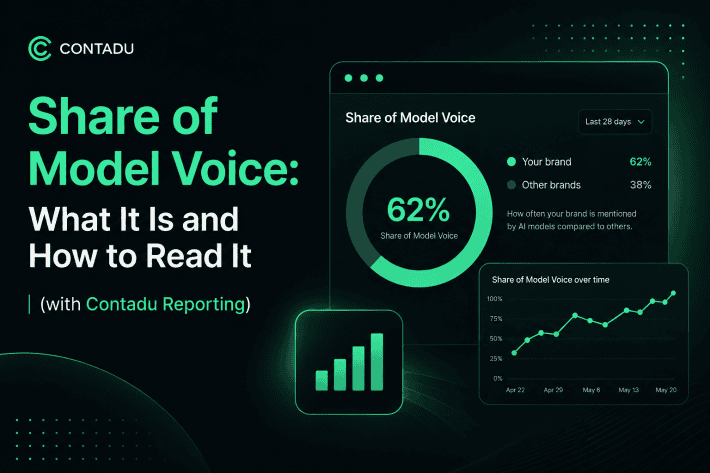
A: In Google Analytics, traffic from Perplexity will typically show up as referral traffic from perplexity.ai. However, remember that Perplexity often results in zero-click searches, so you must also track secondary metrics like Share of Model Voice (SOMV) and brand search volume.
Q: Why is my site not being cited by Perplexity?
A: There are three common reasons: 1) You are blocking PerplexityBot in your robots.txt. 2) Your content lacks original data or Information Gain. 3) Your brand lacks Entity Salience and third-party mentions, causing the engine to distrust your domain as a primary source.
Q: Do backlinks matter for Perplexity?
A: The hyperlink itself matters less than the context. Perplexity evaluates brand mentions (co-occurrence) on authoritative sites. A mention of your brand on a high-trust site, even without a link, builds the entity trust required for Perplexity to cite you.
Q: How long does it take to see results from Perplexity SEO?
A: Because Perplexity relies on real-time web browsing, technical fixes (like unblocking the bot) can yield results in days. However, building the third-party entity authority required to be cited for competitive, commercial queries is a long-term PR strategy that typically takes 3 to 6 months.