

AI-Powered Knowledge Architecture: How Chat GPT and Contadu Revolutionized Content Marketing in the Accounting Industry.
About the Author
Paweł Kijko (klewer.pl) – Digital marketing expert, trainer, and academic lecturer at the University of Warmia and Mazury (Institute of Journalism and Social Communication). He specializes in advertising, app promotion, and the practical application of AI in business. A speaker at prestigious international conferences (including Affiliate Summit East in New York and Tes Affiliate Conference in Prague), and a member of the elite Forbes Community Council.
Introduction: A Challenge in a World of Paragraphs
In the accounting and advisory industry, information is a commodity with the shortest shelf life. Every change in tax law requires an immediate response; a single substantive error can cost not only money but also the trust built over years.
Taxeo (taxeo.pl) faced a strategic question: How to mass-produce expert content that outpaces the competition in publication speed without sacrificing impeccable quality? Instead of the traditional model based on an army of copywriters, an intelligent system was designed under Paweł Kijko’s leadership, blending machine creativity with professional rigor.
Strategy: An Ecosystem Instead of Just Tools
The key to Taxeo’s success was not the mere implementation of popular chatbots, but the creation of a fully automated “end-to-end” process. This strategy moved away from the ad-hoc use of tools in favor of an integrated “organism” based on four pillars:
- Automation of Repetitive Tasks: Eliminating bottlenecks in the publishing process.
- Real-time SEO Data: Responding to what clients are actually searching for on Google at the exact moment legal changes occur.
- Integration with Official Legal Sources: Ensuring a foundation built on verified facts and regulations.
- Content Humanization: A crucial oversight element where specialists add the final touch and verify technical accuracy.
System Architecture (Tech Stack)
The heart of the operation is the CONTADU platform, which serves as the center for content management and optimization. To ensure the system is fully autonomous and effective, it was reinforced with an advanced technological stack:
- Generative Engine (OpenAI API): Responsible for efficiently generating the text layer.
- Semstorm: Providing precise analytical data and keyword insights.
- Make.com: The “nervous system” of the setup, ensuring seamless data exchange and workflow automation between all tools.
Project Goals
- Scalability: Mass production of high-quality content while maintaining existing human resources.
- Speed (Time-to-market): Reducing the time between a change in regulations and publication across all channels.
- Omnichannel: Instant adaptation of content for SEO, social media, and newsletters.
- Leadership Image: Building Taxeo’s authority as the most up-to-date source of tax knowledge.
The Process: From Paragraph to Podcast.
What distinguishes Taxeo’s approach is its deep grounding of AI in legal realities. Instead of relying on the model’s general knowledge, the system retrieves data directly from Journals of Laws, tax rulings, and official positions of tax authorities.
- Analysis and Framework:Based on data from Semstorm and Contadu, the system builds a logical article structure that answers real questions from users on Google.
- Expert Generation:AI creates a sketch using the provided source materials.
- Human-in-the-loop (Humanizacja):This is a critical step. Each submission is sent to a Taxeo specialist (HR, accountant, or consultant), who verifies the content and gives it a final polish.
- Omnichannel 2.0:Approved text is automatically formatted for various channels: from substantive posts on LinkedIn, to educational posts on Facebook, to updates on Google My Business.
A New Dimension of Content Consumption: AI Podcasts
Taxeo has gone a step further by implementing audio formats generated 100% by AI from articles. This allows clients to choose between reading about CIT changes or listening to them on Spotify on their way to the office.
Results: An impressive scale.
The implementation of intelligent automation has brought Taxeo results that go beyond just time savings:
- Growth in search engines:Google Search Console data confirms a sharp increase in organic visibility. The taxeo.pl website has become an information hub that attracts users seeking specific tax solutions.
- New channels of reach:Being on Spotify and iTunes has opened the company to a new audience. Statistics show that users actively search for accounting topics directly in the audio platform’s search engine.
- Conversion and Relationships:The increased amount of valuable content translated into a measurable increase in the number of calls to the company’s branches (data from Google My Business), which proves that content education is the shortest way to acquire customers.
“AI doesn’t replace experts for us – it unleashes their potential. Thanks to automation, our specialists spend their time verifying the most important facts, rather than tedious text formatting or post planning.”
Case study description: Using AI and marketing automation to promote Taxeo.
Challenge.
Taxeo, as a company providing accounting and consulting services, operates in an industry that requires high-quality expert content, substantive relevance, and clear communication of complex tax issues. The main challenge was:
- scaling content production without losing quality,
- increasing organic visibility on Google,
- building an expert image,
- effective use of specialists’ knowledge without excessive involvement of their time.
Strategy.
In response to these needs, I designed and implemented an automated content marketing ecosystem based on AI tools, which was centered on the ChatGPT API and analyses performed by Contadu.
The key assumption of the strategy was to combine:
- automation,
- artificial intelligence,
- SEO data,
- and the expert knowledge of the Taxeo team.
The TAXEO marketing collaboration strategy with AI can be described in the following diagram:
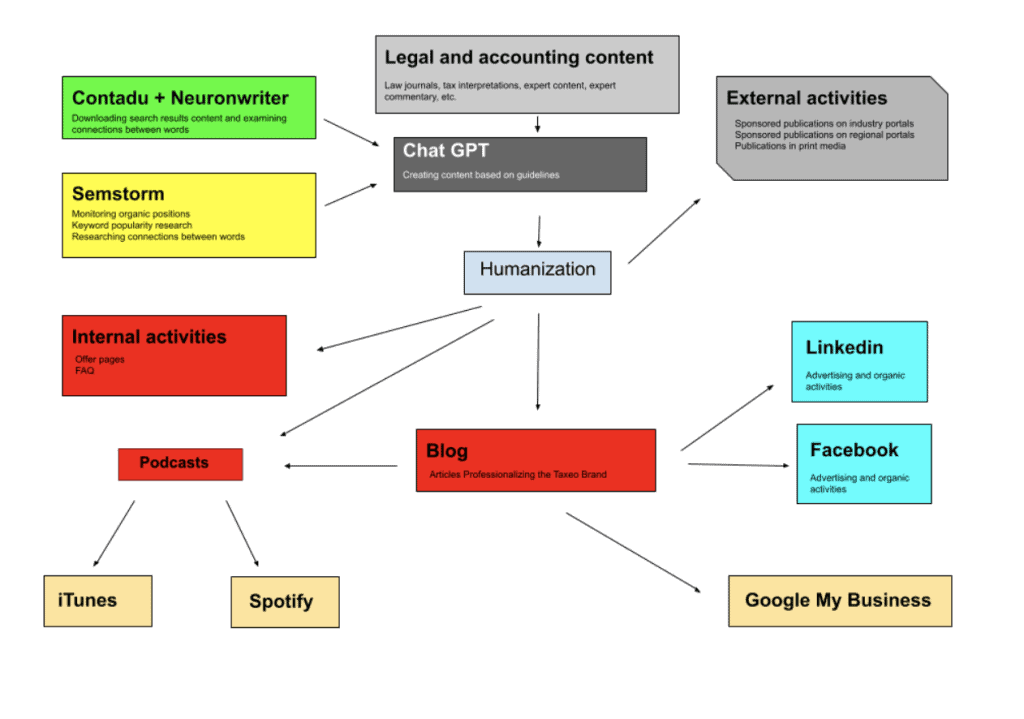
Diagram No. 1: Taxeo Marketing Collaboration Strategy with AI
Tools used in the project.
1. ChatGPT (API)
The ChatGPT API served as the primary content generation engine. Thanks to carefully designed prompts, the tool enabled the creation of:
- extensive expert articles (tax law, accounting, human resources),
- blog content,
- sponsored articles,
- offer content (landing pages),
- scripts for podcasts.
AI enabled mass production of content while maintaining a logical structure, expert language, and compliance with SEO guidelines.
2. Make.com – Process Automation.
Make.com served as the tool that integrated the entire process. I configured automated scenarios that:
- retrieved keywords,
- combined data from several tools,
- passed them to ChatGPT,
- generated ready-made content drafts.
This reduced a process that previously required many hours of manual work to a minimum. All content was generated based on Google Sheets files, and the entire process consisted of the following steps:
- Checking your content needs in Google Sheets
- Creating an article based on an extended prompt that retrieves content from base materials (Semstorm, Contadu, official journals, tax interpretations, etc.)
- Publishing an article in a Google Docs file shared with accountants
- Checking subsequent needs assigned to the generated article
- Generating content for social media and inserting it into a Google Sheets file
- Generating a shortened description of the article to be inserted into the Meta Description and placing it in the Google Sheets file
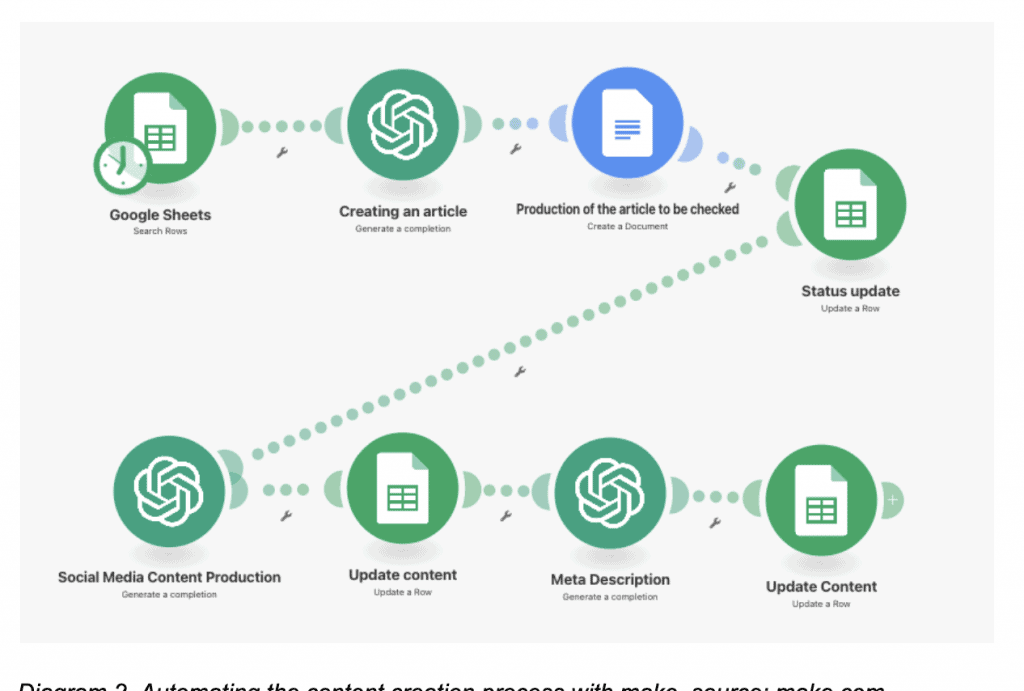
Diagram 2. Automating the content creation process with make, source: make.com
3. Semstorm – SEO analysis.
Semstorm was my primary source of SEO data. I used it to:
- keyword popularity analysis,
- research on semantic connections,
- monitoring organic positions,
- technical audits (including page speed).
Based on this, I created lists of topics and keywords, which were then sent to the automated process at Make.com.
4. Contadu – analysis of content and structure
The next step was the use of Contadu, which:
- analyzed competitor content in search results,
- examined the connections between keywords,
- generated the article skeleton (headlines, sections, questions) via a built-in AI assistant called NEURO
This framework was then refined using ChatGPT, so that the content was simultaneously:
- SEO friendly,
- logical,
- user-readable.
Enriching content with expert knowledge.
An important element of the process was the addition of automation real substantive knowledgeAt Make.com, I included data from:
- Journal of Laws,
- interpretations of tax offices,
- positions of tax authorities,
- publicly available industry sources.
Thanks to this, the content generated by AI was not only “descriptive”, but also embedded in the current legal status.
Humanization of content.
Each generated article went through the so-called humanization. It consisted of:
- forwarding the content to the appropriate Taxeo specialists (HR, JDG, companies),
- substantive verification,
- making corrections,
- acceptance of the final version.
Only after this stage the content was published as:
- blog articles,
- sponsored articles,
- partner materials,
- offer content on the website.
Offer content and landing page.
As part of the same process, using different prompts, I also generated:
- offer pages for specific services,
- landing pages for specific customer segments,
- descriptions of sales-related services.
Thanks to this, Taxeo’s offer was linguistically consistent with expert content, but at the same time focused on conversion.
Podcasts created by AI.
An important element of the cooperation was also the use of AI to create podcasts.
- Audio scripts were created in NotebookLM based on the articles.
- The podcasts were 100% AI-generated.
- Published on Spotify and Apple Podcasts.
- Then embedded directly into articles on the site.
This allowed users to choose their preferred form of consuming content – reading or listening.
The podcasts, like the texts, were verified by Taxeo accountants and specialists.
Content distribution process.
An important element of the entire strategy was not only the creation of content, but also its system distribution, designed as an iterative process. Relevant content was also generated by AI.
After completing the humanization and content approval stages, each piece of content was sent to the planned distribution funnel:
Taxeo company blog
Articles were published in an appropriate format on the blog, while maintaining:
- SEO structures (headings, internal linking),
- text version and embedded podcast,
- current legal and interpretative data, sources and links
The blog played the central repository of expert knowledge and the basis for further promotional activities.
LinkedIn
On the basis of one article, shortened, expert publications were created:
- adapted to the LinkedIn format,
- highlighting key proposals or changes to regulations,
- directing traffic to the full version of the article on the Taxeo website.
This channel was used mainly for building an expert image and B2B communication.
Facebook
The content was adapted to a more accessible, educational form:
- shorter posts,
- simple explanations of tax issues,
- calls to read the full material.
Thanks to this, Taxeo also reached individual customers and micro-entrepreneurs.
Google My Business
Each article was additionally distributed in the form of:
- news,
- educational posts,
- links to expert content.
This allowed us to increase local visibility and strengthen the company’s credibility in the eyes of potential clients looking for accounting services.
Spotify
This channel allowed us to reach users looking for information on specific topics and the content was distributed in the form of:
- podcasts with complete descriptions and links to source articles,
- embedded podcast episodes within specific blog articles.
The entire distribution process waspartially automatedand based on previously prepared content formats, thanks to which one publication could be effectively used in many communication channels without the need to create everything from scratch.
Effects.
The use of AI and automation has brought tangible benefits:
- a significant increase in the amount of published content,
- improving organic visibility,
- saving time for the expert team,
- communication consistency,
- the ability to quickly scale marketing activities,
- constant feedback allowing for continuous improvement of the quality of materials.
Additionally, in the screenshots below you will notice that Taxeo has recorded specific increases in content distribution reach – in popular search engines.
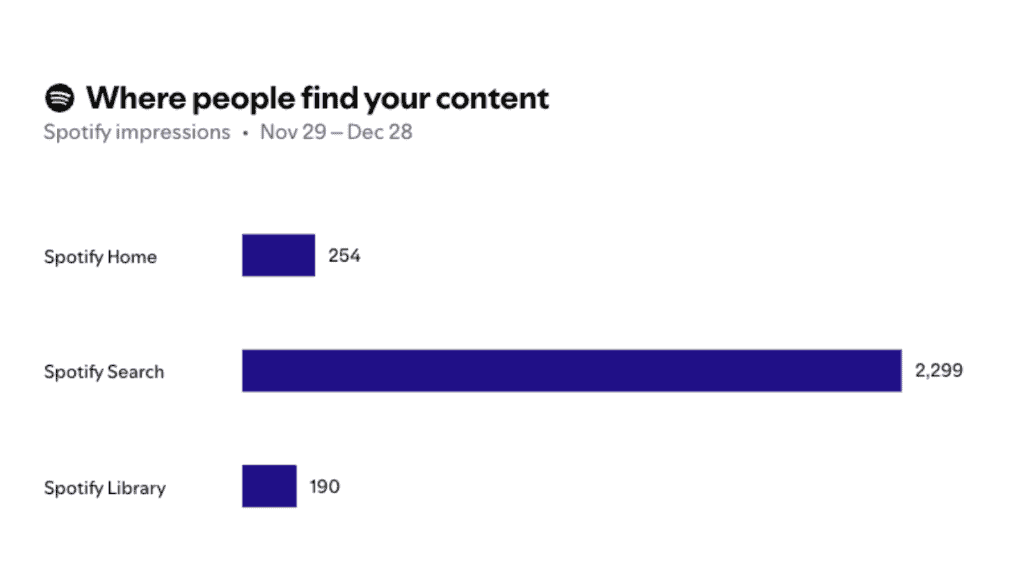
Screenshot 1. The most common source of views for a given podcast was the Spotify search engine, which suggests that users entered specific accounting topics into the search engine, source:Spotify.com
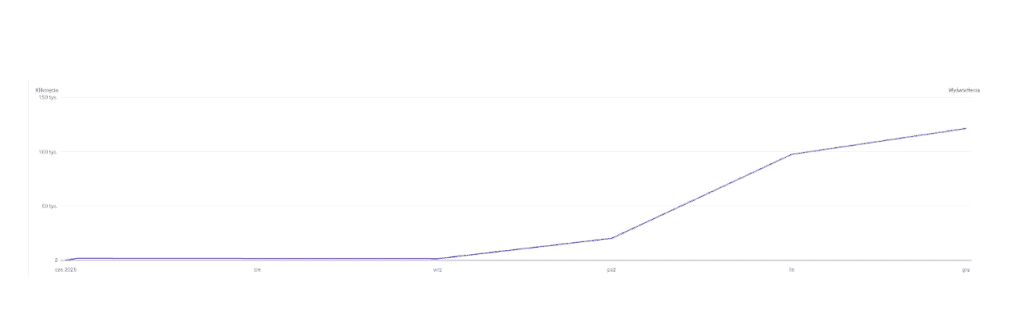
Screenshot 2. Increase in the organic visibility of the website taxeo.pl as a result of cooperation with AI, source: Google Search Console
Summary.
Cooperation with Taxeo has shown that AI does not replace experts, but effectively supports their work. A carefully designed process combining ChatGPT, Make.com, SEO tools, and expertise, including Contadu, allowed us to create a modern, scalable, and effective content marketing system for the accounting industry.
The Taxeo case study offers a lesson for modern marketing: AI works best when integrated into a larger, well-thought-out architecture. By combining technology with genuine expertise, Taxeo has proven that even in an industry as conservative as accounting, it’s possible to build a modern, dynamic brand that not only follows trends but also creates them.
